SRJ Piping India company logo – leaders in fire protection, industrial piping, and heavy structural fabrication solutions

How to Prevent Catastrophic Steam Piping Accidents

Table of Contents

Are you concerned about the silent dangers lurking within your industrial steam piping systems? Have you ever felt uncertain about implementing robust safety measures that protect your facility and personnel?

A single failure can lead to devastating consequences: explosions, severe burns, structural damage, prolonged downtime, and even fatalities. Relying on outdated practices or incomplete knowledge is a risk no one in charge of plant safety can afford.

But what if you could systematically address these vulnerabilities? What if you had a clear roadmap to build a safety program that significantly reducing the likelihood of catastrophic accidents?

By the end of this guide, you’ll confidently know how to identify, mitigate, and manage the risks associated with industrial steam piping. This will empower you to implement adequate preventative measures and enhance plant safety. 

Guide to Preventing Steam Piping Accidents

Implementing a comprehensive safety program for your industrial steam piping system is a multifaceted process that requires diligent planning, execution, and continuous vigilance. Follow these steps to build a robust defense against potential failures.
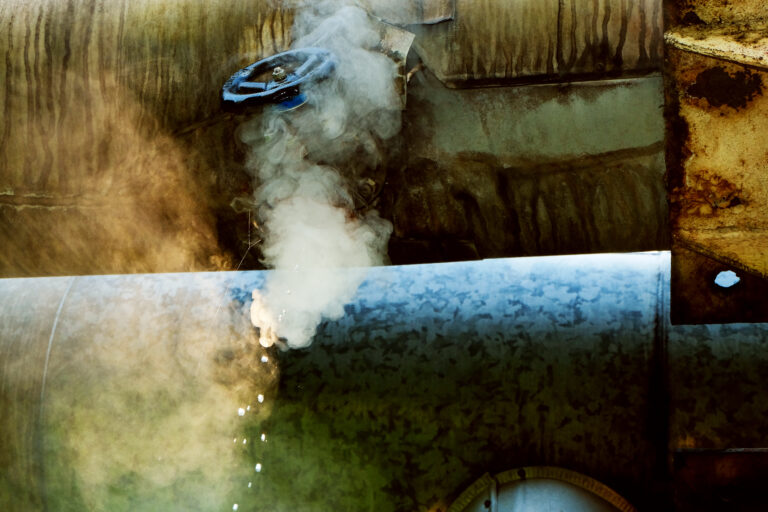
Steam leaking from a corroded industrial pipe, indicating a dangerous failure point in the piping system.

Conduct a Comprehensive Steam Piping Risk Assessment

Preventing catastrophic steam pipe failures begins with understanding exactly where your vulnerabilities lie. A detailed risk assessment is the foundation of any effective safety program.

What to do:

  • Identify potential hazards throughout the steam system lifecycle—from design and installation through operation and maintenance. Consider factors like material degradation (corrosion, fatigue), operational stresses (pressure, temperature cycles, vibration), external factors (support issues, insulation damage), and human error.
  • Analyze each hazard’s potential consequences, including injury, property damage, environmental impact, and business interruption.
  • Evaluate the likelihood of each hazard occurring based on historical data, system condition, operational practices, and industry experience (including lessons learned from steam pipe accidents in other facilities).
  • Combine the likelihood and consequence to determine a risk level for each identified vulnerability.
  • Prioritize risks based on severity to focus mitigation efforts where they are most needed. This is a crucial part of conducting a steam piping risk assessment effectively.

Why it matters:

A thorough risk assessment clearly shows your system’s hazards and potential impact. It moves you beyond generic safety concepts to address the actual risks present in your facility. This prioritization ensures resources are allocated efficiently to tackle the most significant threats, making your efforts to prevent steam pipe failure targeted and effective.

Ensure Proper System Design and Material Selection

The inherent safety of a steam piping system is primarily determined during its initial design and material selection. Flaws here can create latent hazards that are difficult to mitigate later.

What to do:

  • Verify that the system design follows relevant industry codes and standards (like ASME B31.1 for Power Piping or B31.3 for Process Piping) and all applicable safety regulations. This includes proper pipe sizing, routing, support structures, and thermal expansion compensation.
  • Select piping materials appropriate for the specific operating conditions (pressure, temperature, fluid properties, corrosive potential) and expected lifespan. Consider factors like susceptibility to corrosion (including galvanic corrosion if dissimilar metals are used), erosion, fatigue, and brittleness.
  • Ensure adequate provision for safety relief valves (SRVs) or pressure safety valves (PSVs) is included in the design to protect against overpressure events, which can be a primary cause of industrial steam pipe accidents.
  • Design the system with accessibility for future inspection, maintenance, and repairs.

Why it matters:

A correctly designed system using appropriate materials provides the fundamental integrity to contain high-pressure, high-temperature steam safely. Poor design or material choices can lead to premature failure, stress points, and an inability to handle operational stresses, significantly increasing the risk of leaks, ruptures, or explosions. Preventing steam pipe explosions starts with a design that accounts for all potential forces and degradation mechanisms.

Implement Robust Installation and Welding Procedures

Poor installation can compromise even the best design. Proper techniques, especially for welding, are paramount to ensuring the physical integrity of the piping system.

What to do:

  • Develop and strictly follow detailed installation procedures for proper alignment, support placement, and stress relief requirements.
  • Use qualified welders and welding procedures (WPS – Welding Procedure Specifications) that meet industry standards (like ASME Section IX or AWS D10.12).
  • Implement thorough quality control measures during installation, including visual inspections and non-destructive Testing (NDT) methods like radiography, ultrasonic testing, or dye penetrant testing on welds, especially at critical joints.
  • Ensure proper handling and storage of piping components and materials before installation to prevent damage or contamination. Avoiding certain types of contamination is crucial; while some blogs focus on high-purity systems, contamination in steam lines can also lead to corrosion and blockages, affecting safety.

Why it matters:

Incorrect installation can introduce unintended stresses, misalignment, or weak points into the system. Poor welding is a common cause of industrial pipe safety issues, leading to leaks or catastrophic failures at the joint. Ensuring high-quality installation is a direct measure for preventing steam pipe failure caused by construction defects. Safety procedures for steam pipe installation must be meticulously followed.

Establish a Rigorous Preventive Maintenance Program

Time and operational stresses wear down any piping system. A proactive, well-planned maintenance program must identify and address degradation before it leads to failure. Safety protocols for steam piping maintenance are not optional; they are mandatory.

What to do:

  • Develop a detailed preventative maintenance schedule based on the system’s design life, operating conditions, material types, and risk assessment findings.
  • These include regular inspections (internal and external), thickness measurements (using UT), and monitoring for signs of corrosion, erosion, fatigue cracking, and support degradation.
  • Plan for scheduled downtime to perform necessary repairs, component replacements (valves, traps, expansion joints), and cleaning to remove scale or deposits that can affect flow, cause water hammer, or accelerate corrosion.
  • Implement predictive maintenance techniques where feasible, such as acoustic monitoring for leaks or vibration analysis for support issues.
  • Maintain comprehensive records of all maintenance activities, including dates, findings, repairs, and who performed the work.

Why it matters:

Preventive maintenance allows you to catch potential issues when they are minor and manageable, before they escalate into critical problems. It extends the lifespan of your system and significantly reduces the risk of unexpected failures during operation. Neglecting maintenance is a common factor in industrial steam pipe accidents.

Develop Effective Operational Procedures and Training

Human factors play a significant role in industrial accidents. Proper operational procedures and thorough training ensure that the system is run safely and that personnel understand how to respond in various situations.

What to do:

  • Create clear, concise Standard Operating Procedures (SOPs) for all critical operations involving the steam system, including startup, shutdown, handling pressure/temperature changes, and isolating sections for maintenance.
  • Ensure operators understand the system’s design limits and the consequences of exceeding them.
  • Implement a comprehensive training program for all personnel interacting with or working near the steam piping system, covering hazards, safety procedures, lockout/tagout procedures, and emergency protocols.
  • Review and update SOPs and training programs regularly based on system changes, incident analysis (lessons learned from steam pipe accidents), and best practices.
  • Foster a strong safety culture where personnel are encouraged to report near misses, unusual observations, or potential hazards without fear of reprisal.

Why it matters:

Well-trained operators following established procedures are less likely to make mistakes that could compromise system integrity or lead to accidents. They are also better equipped to identify early warning signs of potential failure and respond correctly in an emergency, helping prevent steam pipe failure caused by operational errors.

Maintain Vigilant Inspection and Monitoring Practices

While preventative maintenance focuses on scheduled tasks, ongoing inspection and monitoring provide real-time awareness of the system’s condition and can detect unforeseen issues.

What to do:

  • Implement a regular industrial pipe safety inspection schedule beyond routine maintenance checks. This includes visual inspections of piping, supports, insulation, and connections.
  • Where appropriate, utilize advanced monitoring technologies, such as continuous online monitoring for steam trap performance, corrosion rates, vibration, or thermal imaging to detect hot spots or insulation damage.
  • Establish procedures for responding to alarms or unusual readings from monitoring systems.
  • Conduct internal inspections during planned outages, using visual inspection with borescopes or specialized NDT techniques to assess internal condition, especially in areas prone to corrosion or erosion.

Why it matters:

Vigilant inspection and monitoring can detect early signs of degradation or operational issues that might be missed by scheduled maintenance alone. This allows for timely intervention, preventing minor problems from escalating into significant safety hazards and preventing steam pipe accidents before they happen. Industrial pipe safety inspection is a continuous process, not a one-time event.

Establish Emergency Response and Accident Investigation Protocols

Despite all preventative efforts, accidents can still happen. Clear emergency response and investigation procedures are crucial to minimize harm and learn from incidents.

What to do:

  • Develop comprehensive emergency response plans for steam system failures (e.g., leaks, ruptures, and fires involving steam). These plans should include clear evacuation procedures, isolation protocols, and communication plans with internal teams and external emergency services.
  • Train all personnel on their roles and responsibilities during an emergency.
  • Conduct regular emergency drills to test the plan’s effectiveness and personnel readiness.
  • Establish a formal accident investigation process to determine the cause of any incident or near-miss involving the steam system.
  • Use the investigation findings (drawing lessons learned from steam pipe accidents, internal and external case studies) to update procedures, maintenance plans, and training programs to prevent recurrence

Why it matters:

A well-drilled emergency response can save lives and minimize damage if an incident occurs. A thorough investigation ensures that you learn from failures, addressing the underlying issues rather than just the symptoms, which is vital for continuous improvement in preventing steam pipe accidents.

Conclusion

Navigating the complexities of industrial steam piping safety might seem daunting, but following a structured approach can significantly reduce risks and prevent devastating accidents. Preventing steam pipe failure is not just about pipes but systems, procedures, and people.

Begin your initial assessment today and secure your facility’s future. Implementing these safety protocols for steam piping maintenance and operation is an investment that pays dividends in safety, reliability, and peace of mind. You’ve got this, and your facility’s safety depends on it.

Need expert assistance in conducting your risk assessment or developing a comprehensive safety program? Contact us now!

Know about us more 

  1. The Ultimate Guide to High-Pressure Piping: What Every Plant Manager Needs to Know
    This blog provides a comprehensive overview of high-pressure piping systems, offering essential context for understanding steam piping safety and accident prevention.
  2. Key Benefits of Professional Piping Inspection Services
    This blog highlights the importance of regular inspections, a critical strategy for preventing catastrophic steam piping accidents discussed in the blog.
  3. American Society of Mechanical Engineers (ASME) – B31.1 Power Piping
    ASME’s B31.1 standard provides authoritative guidelines for steam piping design and safety, essential for preventing accidents in high-pressure systems.
  4. U.S. Chemical Safety Board (CSB) – Steam Piping Safety Recommendations
    The CSB offers recommendations based on investigations of steam piping incidents, providing valuable insights for accident prevention.

Related Blog

Comprehensive Maintenance Checklist for Industrial Piping Systems
This blog provides a detailed checklist for maintaining piping systems, complementing the focus on preventive measures to avoid steam piping accidents.


Concerned About Steam Piping Safety?

Our experts help you prevent catastrophic steam failures with audits, maintenance plans, and safety upgrades.