
SRJ Piping India company logo – leaders in fire protection, industrial piping, and heavy structural fabrication solutions

Industrial Staircase Safety Secrets: Design Features That Prevent Workplace Accidents

Table of Contents

Did you know that falls are consistently one of the leading causes of workplace injuries and fatalities in industrial settings? A significant portion of these falls occur on staircases, highlighting a critical need for enhanced safety measures. This guide unveils the secrets to industrial staircase safety, providing actionable insights into design features that prevent accidents and protect your workforce.

This comprehensive guide equips safety officers, site supervisors, compliance managers, operational personnel, and industrial engineers with critical safety protocols, regulatory compliance information, and best practices. You will gain knowledge on designing, maintaining, and using industrial staircases to create a safer operating environment. 

Let’s delve into the world of industrial staircase safety and discover how proactive design and maintenance can dramatically reduce workplace accidents.

Industrial Staircase Regulations and Standards

Navigating the regulatory landscape is the first step in ensuring the safety of industrial staircases. Several organizations establish standards and guidelines, with the Occupational Safety and Health Administration (OSHA) being the primary regulatory body in the United States. Understanding and adhering to these regulations is not merely a legal requirement but a moral imperative to protect workers.

OSHA 1910.24 outlines specific requirements for fixed industrial stairs, covering aspects like:

  • Stair Width: Minimum width requirements to allow safe passage.
  • Rise and Tread Dimensions: Specific dimensions for risers and treads to ensure comfortable and consistent stepping.
  • Handrails and Guardrails: Mandatory features with height and strength specifications to prevent falls.
  • Load Capacity: The ability of the staircase to withstand intended loads.
  • Maintenance: Regular inspections and repairs are conducted to ensure safe conditions.

Beyond OSHA, other standards such as ANSI (American National Standards Institute) and IBC (International Building Code) may also apply, depending on the specific industry and location. Consulting these standards ensures a holistic approach to safety.

Failure to comply with these regulations can result in hefty fines, legal liabilities, and, most importantly, workplace accidents. Therefore, a thorough understanding of these standards is essential for all stakeholders involved in industrial staircase design, construction, and maintenance.
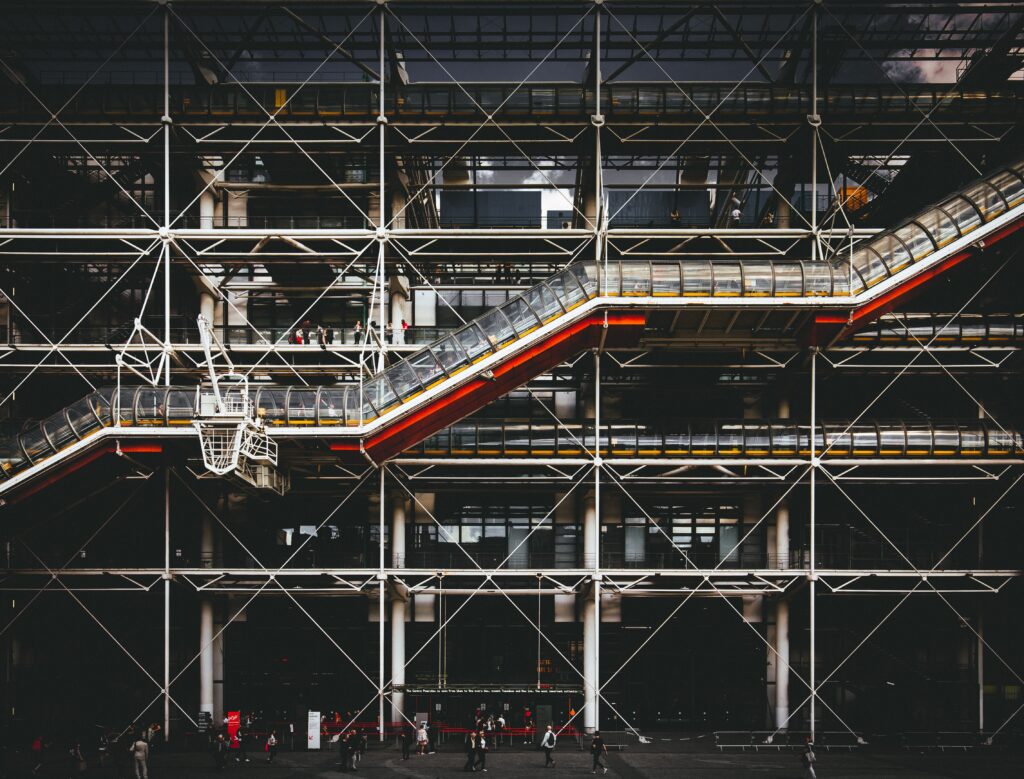
External industrial framework showing complex exposed structural supports and diagonal bracing design.

Common Industrial Staircase Accidents: The Risks

Before delving into preventive measures, it’s crucial to understand the common types of accidents that occur on industrial staircases. Awareness of these risks allows for the targeted implementation of safety features.

  • Slips and Falls: The most frequent type of accident, often caused by slippery surfaces (due to spills, weather conditions, or improper cleaning), inadequate footwear, or rushing.
  • Trips: Commonly caused by uneven treads, obstructions on the stairs, or poor lighting.
  • Falls from Height: Resulting from missing or inadequate handrails, or attempting to carry heavy loads without proper support.
  • Impact Injuries: Occurring when workers collide with fixed objects due to narrow staircases or insufficient headroom.
  • Overexertion: Straining muscles or losing balance while carrying heavy objects up or down stairs.

Analyzing accident data within your specific industrial environment helps identify recurring issues and prioritize safety improvements. By understanding the common causes of staircase accidents, you can implement targeted solutions that effectively minimize these risks.

Designing for Safety: Features of Safe Industrial Staircases

The design phase is the most crucial aspect of industrial staircase safety. Incorporating safety features from the outset dramatically reduces the likelihood of accidents. Let’s explore the key design elements that contribute to a safe staircase.
Stairway Dimensions and Ergonomics

  • Consistent Rise and Tread: Maintaining uniform rise and tread dimensions is paramount to prevent tripping. OSHA recommends specific ranges for both.
  • Optimal Stair Angle: A stair angle between 30 and 35 degrees is generally considered optimal for comfortable and safe ascent and descent.
  • Adequate Stair Width: Sufficient width ensures that workers can pass each other safely and carry equipment without risking falls.
  • Sufficient Headroom: Providing ample headroom (at least 7 feet) prevents head injuries and allows for comfortable passage.

Industrial Staircase Handrail Design

  • Handrail Height and Placement: Handrails should be between 30 and 34 inches in height, measured from the top of the stair tread to the top of the handrail. They should be easily accessible and readily available throughout the staircase.
  • Handrail Material and Grip: Selecting durable and slip-resistant materials, such as steel or aluminum, is crucial. Ergonomic grips enhance comfort and safety, especially when wearing gloves.
  • Handrail Extensions: Extending handrails beyond the top and bottom steps provides additional support for users as they approach and leave the staircase.
  • Midrails and Guardrails: Installing midrails or other intermediate guardrails between the handrail and the stair treads prevents objects or personnel from falling through the open space.
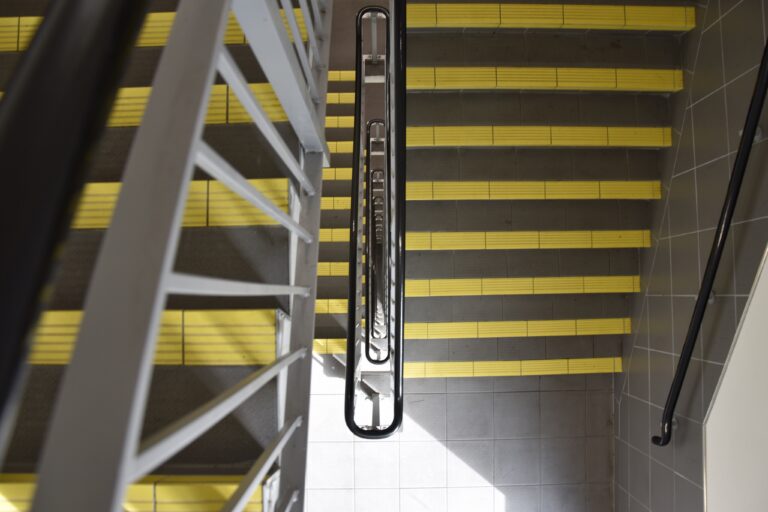
Top view of industrial staircase with yellow anti-slip tread markings for enhanced safety.

Anti-Slip Staircase Design

  • Slip-Resistant Tread Surfaces: Incorporating treads with high friction coefficients, such as abrasive coatings, textured surfaces, or rubber inserts, significantly reduces the risk of slips.
  • Proper Drainage: Designing staircases with adequate drainage prevents water accumulation, which can create slippery conditions.
  • Regular Cleaning and Maintenance: Implement a routine cleaning schedule to remove spills, debris, and other contaminants that can compromise slip resistance.

Staircase Visibility Safety Features

  • Adequate Lighting: Providing sufficient illumination throughout the staircase ensures that users can see each step and any potential hazards.
  • High-Contrast Step Edges: Marking step edges with high-contrast colors or reflective tape enhances visibility, especially in low-light conditions.
  • Photoluminescent Markings: Utilizing photoluminescent materials that glow in the dark can provide crucial visibility during power outages or emergencies.

Emergency Staircase Design Standards

  • Fire-Resistant Materials: Constructing emergency staircases with fire-resistant materials ensures they remain structurally sound during a fire, allowing for safe evacuation.
  • Clear Signage: Prominently displaying emergency exit signs that indicate the direction of escape routes.
  • Emergency Lighting Systems: Installing backup lighting systems that activate automatically during power outages to guide workers to safety.
  • Adequate Width for Evacuation: Ensuring that emergency staircases are wide enough to accommodate the anticipated number of evacuees.

Industrial Staircase Load Capacity

  • Calculating Load Limits: Properly calculating the maximum load capacity of the staircase based on anticipated usage and the weight of the equipment.
  • Reinforced Structures: Utilizing robust structural designs and materials to ensure the staircase can withstand the intended loads without compromising safety.
  • Regular Inspections for Structural Integrity: Conducting regular inspections to identify any signs of structural weakness or damage, such as cracks, corrosion, or deformation.
  • Posting Load Capacity Limits: Displaying the maximum load capacity on or near the staircase to prevent overloading.

Staircase Ergonomic Design

  • Optimized Step Dimensions: Designing steps with appropriate rise and tread dimensions to minimize strain on joints and muscles.
  • Proper Handrail Height and Placement: Ensuring handrails are at a comfortable height and position to provide adequate support and reduce the risk of overexertion.
  • Landing Platforms: Incorporating landing platforms at regular intervals to allow workers to rest and regain their balance, especially when carrying heavy loads.
  • Adjustable Handrails: In certain situations, adjustable handrails can be beneficial for accommodating workers of varying heights.

Staircase Weather Protection

  • Covered Staircases: Providing covered staircases to protect users from rain, snow, ice, and excessive sunlight.
  • Heated Treads: Installing heated treads to prevent ice and snow accumulation in cold climates.
  • Wind Barriers: Implementing wind barriers to minimize the impact of strong winds on staircase users.
  • UV-Resistant Materials: Utilizing UV-resistant materials to prevent degradation and maintain structural integrity in areas with high sun exposure.

Industrial Staircase Handrail Design: A Deep Dive

Handrails are the most critical safety feature on any staircase. Their design has a direct impact on a user’s ability to maintain balance and prevent falls. Here’s a detailed look at handrail design considerations:

  • Height and Extend: Handrails should extend at least 12 inches beyond the top and bottom steps to provide support as users approach and leave the staircase. The height should be between 30 and 34 inches.
  • Graspability: The handrail profile should be easily grasped, typically with a diameter between 1.25 and 2 inches. Ergonomic designs are preferred for a comfortable grip.
  • Material and Finish: Durable, slip-resistant materials like steel, aluminum, or PVC are standard. The finish should be smooth and free of sharp edges.
  • Strength and Support: Handrails must be capable of withstanding a concentrated load of at least 200 pounds. Support brackets should be spaced appropriately to prevent sagging or instability.
  • Continuity: Handrails should be continuous throughout the entire staircase, without interruptions or obstructions.
  • Clearance: Ensure adequate clearance between the handrail and any adjacent walls or structures to allow for comfortable hand placement.

Anti-Slip Solutions: Preventing Slips, Trips, and Falls

Slips, trips, and falls are the leading cause of accidents involving staircases in industrial settings. Implementing effective anti-slip solutions is crucial for preventing these incidents.
  • Abrasive Coatings: Applying abrasive coatings to stair treads increases the friction coefficient, providing better grip even in wet or oily conditions.
  • Textured Surfaces: Incorporating textured surfaces, such as raised patterns or grooves, on stair treads enhances slip resistance.
  • Rubber Inserts: Installing rubber inserts or mats on stair treads provides a resilient and slip-resistant surface.
  • Grip Tape: Applying grip tape to stair treads offers a cost-effective and easily installed anti-slip solution.
  • Proper Drainage: Ensuring adequate drainage prevents water accumulation, which can create slippery conditions.
  • Regular Cleaning: Implementing a routine cleaning schedule to remove spills, debris, and other contaminants that can compromise slip resistance.
  • Winterization: Utilizing winterization strategies, such as heated treads, de-icing agents, or snow removal, to prevent ice accumulation.
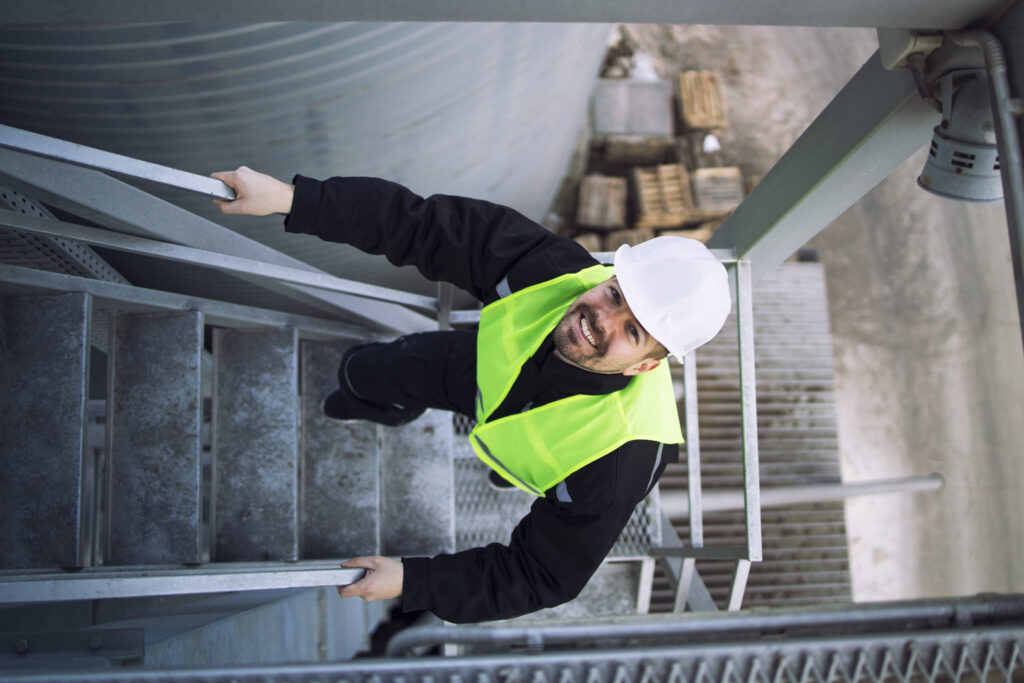
Smiling industrial worker wearing PPE climbs a metal staircase on a silo structure.

Staircase Visibility Safety Features: The Safety Path

Adequate visibility is crucial for safe use of stairs, particularly in industrial environments where lighting conditions can be variable.

  • Ambient Lighting: Providing sufficient ambient lighting throughout the staircase to ensure that users can see each step and any potential hazards.
  • Task Lighting: Supplementing ambient lighting with task lighting focused on specific areas of the staircase, such as landings or points of entry and exit.
  • High-Contrast Step Edges: Marking step edges with high-contrast colors or reflective tape to enhance visibility, especially in low-light conditions.
  • Photoluminescent Markings: Utilizing photoluminescent materials that glow in the dark can provide crucial visibility during power outages or emergencies.
  • Obstruction-Free Lighting: Ensuring that lighting fixtures are free from obstructions and adequately maintained to provide consistent illumination.
  • Glare Reduction: Minimizing glare from lighting fixtures or natural light sources to prevent visual discomfort and impaired visibility.

Emergency Staircase Design Standards: Safe Evacuation

Emergency staircases play a critical role in ensuring safe evacuation during fires, explosions, or other emergencies. Designing these staircases to meet specific standards is essential.

  • Fire-Resistant Construction: Constructing emergency staircases with fire-resistant materials to ensure they remain structurally sound during a fire.
  • Enclosed Stairwells: Enclosing emergency stairwells to protect them from smoke and heat.
  • Clear Signage: Prominently displaying emergency exit signs that indicate the direction of escape routes.
  • Emergency Lighting Systems: Installing backup lighting systems that activate automatically during power outages.
  • Adequate Width for Evacuation: Ensuring that emergency staircases are wide enough to accommodate the anticipated number of evacuees.
  • Accessibility: Designing emergency staircases to be accessible to individuals with disabilities.
  • Regular Inspections and Maintenance: Conducting regular inspections to ensure that emergency staircases are in good working order and free from obstructions.

Industrial Staircase Load Capacity

Industrial staircases are often subjected to heavy loads from workers carrying equipment or materials. Ensuring adequate load capacity is critical for preventing structural failures and accidents.

  • Calculating Load Limits: Properly calculating the maximum load capacity of the staircase based on anticipated usage and the weight of the equipment.
  • Safety Factors: Applying appropriate safety factors to account for uncertainties and potential overloading.
  • Material Selection: Utilizing high-strength materials that can withstand the intended loads.
  • Reinforced Structures: Incorporating robust structural designs and reinforcement to ensure the staircase can withstand the intended loads.
  • Regular Inspections for Structural Integrity: Conducting regular inspections to identify any signs of structural weakness or damage.
  • Posting Load Capacity Limits: Displaying the maximum load capacity on or near the staircase to prevent overloading.

Staircase Maintenance Safety: A Proactive Approach

Even the best-designed staircases require regular maintenance to ensure continued safety. A proactive maintenance program is essential for preventing accidents.

  • Regular Inspections: Conducting routine inspections to identify potential hazards, such as loose handrails, damaged treads, or inadequate lighting.
  • Prompt Repairs: Addressing any identified issues promptly to prevent them from escalating into more serious problems.
  • Cleaning and Debris Removal: Implementing a routine cleaning schedule to remove spills, debris, and other contaminants.
  • Lubrication: Lubricating moving parts, such as hinges and latches, to ensure smooth operation.
  • Lighting Maintenance: Replacing burned-out bulbs and cleaning lighting fixtures to maintain adequate illumination.
  • Record Keeping: Maintaining accurate records of inspections, repairs, and maintenance activities.
  • Training: Providing training to maintenance personnel on proper inspection and repair procedures.

Staircase Ergonomic Design: Comfort and Safety Combined

Ergonomic design principles aim to optimize the interaction between workers and their environment, reducing the risk of strain, fatigue, and injuries. Applying ergonomic principles to staircase design can enhance both comfort and safety.

  • Optimized Step Dimensions: Designing steps with appropriate rise and tread dimensions to minimize strain on joints and muscles.
  • Proper Handrail Height and Placement: Ensuring handrails are at a comfortable height and in a suitable position to provide adequate support.
  • Landing Platforms: Incorporating landing platforms at regular intervals to allow workers to rest and regain their balance.
  • Adjustable Handrails: In certain situations, adjustable handrails can be beneficial for accommodating workers of varying heights.
  • Reduced Load Carrying: Implementing strategies to reduce the need for workers to carry heavy loads up or down stairs.

Staircase Weather Protection: Shielding the Elements

Exposure to weather elements can significantly impact staircase safety, creating slippery conditions, reducing visibility, and accelerating material degradation.

  • Covered Staircases: Providing covered staircases to protect users from rain, snow, ice, and excessive sunlight.
  • Heated Treads: Installing heated treads to prevent ice and snow accumulation in cold climates.
  • Wind Barriers: Implementing wind barriers to minimize the impact of strong winds on staircase users.
  • UV-Resistant Materials: Utilizing UV-resistant materials to prevent degradation in areas with high sun exposure.
  • Drainage Systems: Installing effective drainage systems to prevent water accumulation.
  • Regular Maintenance: Conducting regular inspections and maintenance to address any weather-related damage or hazards.

Conclusion

Prioritizing industrial staircase safety is not just about compliance; it’s about protecting your most valuable asset: your workforce. By implementing the design features, maintenance protocols, and safety measures outlined in this guide, you can significantly reduce the risk of accidents and create a safer, more productive work environment. Remember, a proactive approach to safety is an investment in the well-being of your employees and the success of your organization.

Request a comprehensive safety audit for your facility from SRJ Piping India. Explore our safety-compliant industrial solutions. Contact us for expert safety consultation.

Industrial Staircase Safety Secrets: Stop Accidents Before They Happen

Falls on staircases are preventable. Book your SRJ staircase safety inspection and stay OSHA-compliant.