
SRJ Piping India company logo – leaders in fire protection, industrial piping, and heavy structural fabrication solutions

A Guide to Steel Structural Fabrication and Erection

A Guide to Steel Structural Fabrication and Erection

Table of Contents

Steel Structural Fabrication
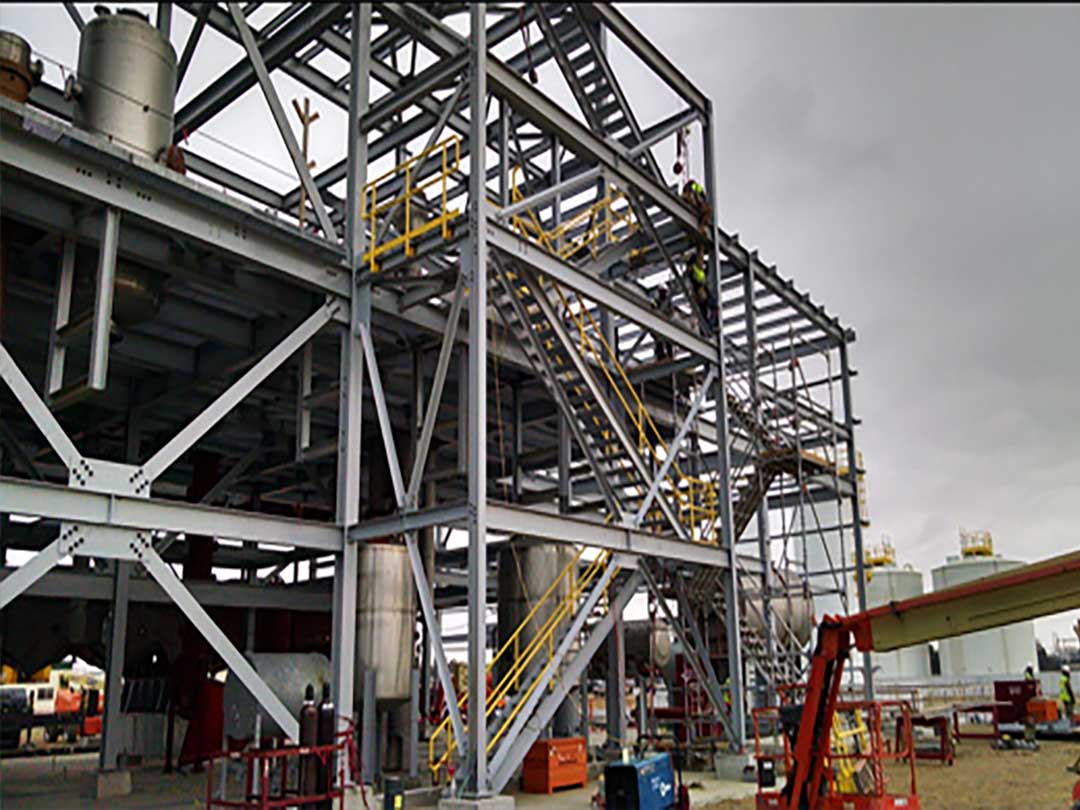
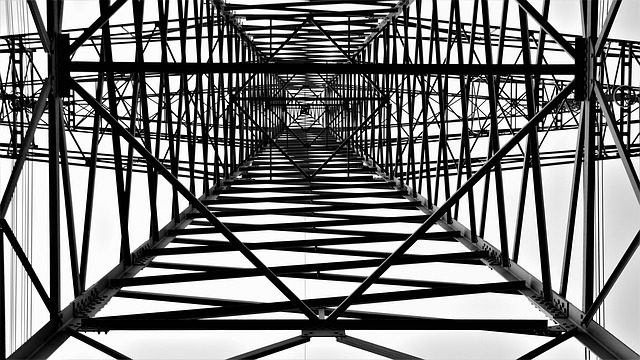
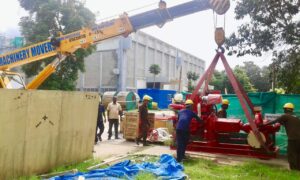
Steel structural fabrication process showcasing precision-engineered steel components for large industrial projects


Steel structural fabrication in the late 19th century stands out as a remarkable turning point in the construction industry, as it was the first time that the world was treated to the man-made marvel of skyscrapers. This period in history also marks the advent of steel being used in structures around the world. 

Since that time, the engineering material known as steel has become a crucial element in commercial buildings as well as personal residences. One of the virtues of using steel to construct a building is that most of the components are prefabricated or fabricated offsite.

This helps steel-framed buildings gain a competitive advantage. Materials such as concrete, on the other hand, have to be mixed and processed at the construction site itself. The portability of steel gives it a considerable edge, as the parts that are manufactured from the material are guaranteed to be of high precision and quality. Furthermore, heavy structural fabricating in a controlled environment tends to enhance speed and improve safety.

Erection Processes

But it is not enough to merely manufacture and deliver the specified steel products. Assembling the components at the site is also pivotal to the construction process. A misstep while erecting steel structures can lead to a devastating collapse, resulting in mass casualties. The success of any project involving steel structures is defined by the efficiency of the fabrication and erection processes.

Nowadays, industrial practices dictate that the production of steel parts also take into account structural design and other engineering aspects of the project. This is precisely why the steel production chain has been modified to reflect the inclusion of architects and construction engineers as well.

In order to provide a full picture, here’s a look at the various types of steel components, the processes commonly used to fabricate them, and other aspects involved in the production and assemblage of steel parts.

Steel Structural Fabrication
High-quality steel structural fabrication for durable frameworks in industrial construction.

Types of Steel Structural Components

Steel beams and columns

In the vast category of structural steel or steel used for construction purposes, horizontal beams and vertical columns are probably the most commonly fabricated parts. These components are crucial to the process of erecting a “skeleton” frame that will eventually go on to support the building’s floors, roofs, and walls. This technique of mass producing steel beams and arranging them in such a way so as to form a robust grid, was pioneered with the construction of the world’s first skyscrapers in the late 1800s.

Steel plates

Unlike beams and columns, steel plates can be used for a number of purposes ranging from small residences to roads and railway tracks. However, the plate specifications will also vary accordingly. The tensile strength of steel plates, as well as their resistance to abrasion and corrosion, are a few physical properties that one should keep in mind while selecting plates. But the true integrity of steel plates is derived from their chemical composition. Usually, plates made of low-carbon steel are preferred as they are easier to cut and drill holes.

Hot-rolled coils

In the construction industry, there is a frequent demand for steel that has been shaped and formed into large sizes. One type of steel component that meets this need is hot-rolled coils. Among the many advantages of steel, its high malleability is utilized to fabricate hot-rolled coils. These coils are a result of bending and rolling metal sheets via a mill at temperatures above 900 degrees Celsius. Given their malleable nature, hot-rolled coils are commonly used in the laying of railroad tracks and guardrails. They are also used to make steel frames in the automobile industry.

Cold-rolled coils

When a hot-rolled coil is processed through a cold reduction mill in order to undergo cooling and annealing, the end product is known as a cold-rolled coil. Since they undergo metallurgical processes such as annealing, cold-rolled coils provide better tolerance and surface conditions as opposed to hot-rolled coils. They also possess far more superior values of tensile and yield strengths. Furthermore, cold-rolled steel is resistant to moisture and corrosion which makes it a suitable material to be used in the construction of beams.

Poly-houses

Pre-fabricated steel does not solely feature in high-rise buildings or private residences. They are also pivotal in constructing smaller yet viable structures such as poly-houses. A poly-house is essentially a short grid of steel parts draped in a polyethylene sheet. Like greenhouses, these structures also act as controlled environments to grow and nurture plants. However, greenhouses are quickly becoming obsolete as poly-houses appear to be more economically and structurally feasible.

Fabrication Procedures and Erection Techniques

Cutting and machining

The transformation of steel into structural steel usually takes place by subjecting the material to a sequence of activities using sophisticated tools. After cleaning and preparing the milled steel, the steel is cut to specified lengths by using cold saws, band saws, hydraulic shears, or water jets. However, scientific advancements also make it possible to execute the cutting procedure by using thermo-chemical processes like flame cutting or arc plasma cutting.

Punching and drilling

Holes are a typical requirement while fabricating structural steel as they help connect the various components during the assembly stage. Drilling holes into machined steel is conventionally carried out using a radial drill. But the advent of computerized numerically controlled (CNC) tools has made it possible to drill holes by simply feeding the required data into a processing system. This technology not only produces accurately-sized holes but also substantially picks up the pace of the drilling process. Manually-drilled holes are usually small in size so as not to increase the effects of strain hardening. They are reamed into the desired sizes later.

Bending and rolling

Bending and rolling structural steel is pivotal to transport the material and ensure that it reaches the destination without suffering distortion or any other damages. By using equipment such as rollers or gag presses, steel beams can be straightened out or bent at the desired angles. Misalignments in structural components can also be solved with heat. By heating and cooling a small area of steel, the member is shortened and pulled back into alignment. This process, referred to as spot heating, is also used to curve the steel accordingly. The cold-working process to bend and roll steel parts is facilitated by dies of varying sizes.

Welding

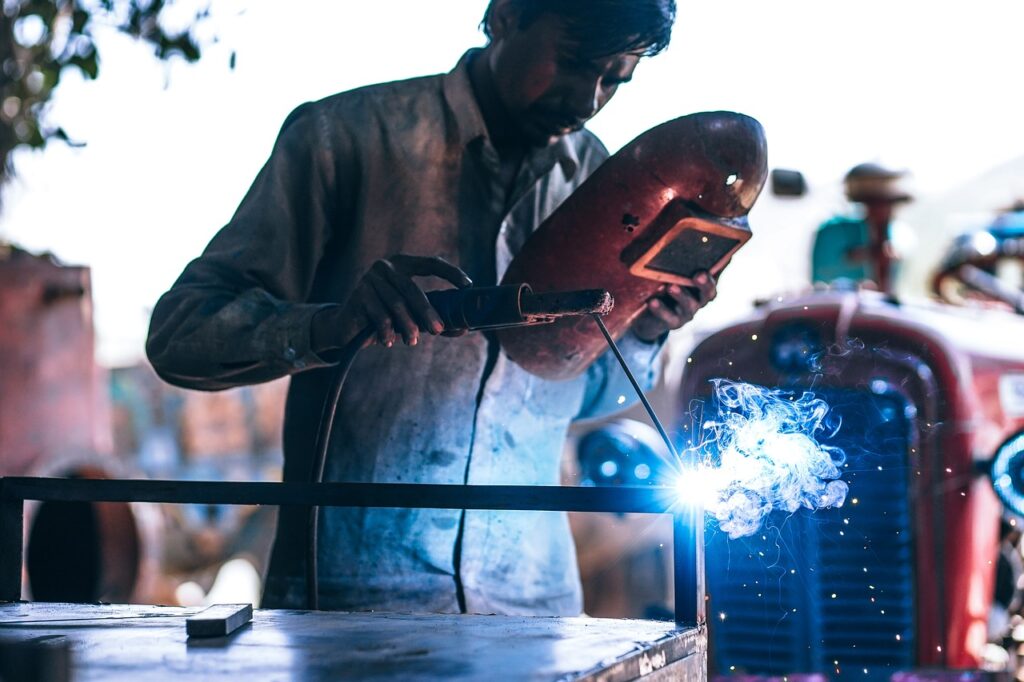
It is truly remarkable that the simple act of fusing two pieces of metal together has had such a significant impact on industrial growth. Nevertheless, this process is indispensable to the fastening and erection of steel components in order to construct a singular steel structure. The various forms of welding such as manual arc welding or submerged arc welding largely depend on the material being welded. Ideally, one would opt for a procedure that produces minimum residual stress while providing maximum weld strength.

MWEPs

The erection of steel structures using pre-fabricated components involves various complex operations such as material handling and member assembly. Out of all the available machinery, one of them that frequently seen on construction sites is a Mobile Elevating Work Platform or MEWP. With the help of cranes, these platforms are able to erect lighter steel elements by bolting the pieces together. Although MEWPs can be used on the ground and on the partially-erected structure, one should be cautious and factor in loading strains before commencing such operations.

Bracings

Another type of apparatus used to setup tall steel frameworks is bracings. Over the entire course of the erection period, the structure must be securely bolted down in order to lift the other components to the top. Additionally, there is also a risk of the building moving when it is subjected to lateral forces and strong winds. In order to prevent this and ensure that the structure is resistant to such forces, bracings of varying shapes are affixed to the steel framework that has been completed so far.

Steel Structural Fabrication

..

Let the experts handle it for you

Rome wasn’t built in a day and neither was the jaw-dropping skyscrapers of the world that appear to soar above the clouds. The fact is that fabricating and erecting steel structures are not only time-consuming processes but also demand immense skills and in-depth technical knowledge. That’s why it might be best to let industry experts like SRJ Piping India take it from here.

Coupled with a diverse team of dedicated workers and expert engineers, SRJ Piping has “constructed” a reputation which supersedes that of any other contractor in the region. By deploying our most sharp-minded team of engineers and adept ironworkers to work on your structural steel project, SRJ promises to be with you through every step of the way.

Our team is always on stand-by to draft a quote based on your application. Still on the fence about getting us to design and fabricate your dream project? Then simply drop by for a no-obligation consultation! Contact us now!

Better yet, reach out to us at +918-0416-63637 or info@srjpiping.com and we’ll get back to you within a day’s time.

Mastering steel structural fabrication and erection requires equal parts precision engineering and real-world site intelligence – a combination that separates safe, durable structures from costly failures. The American Institute of Steel Construction (AISC) confirms that proper fabrication techniques can reduce project costs by up to 18%, a principle demonstrated in our Heavy Structural Fabrication case studies. When the Indian Structural Steel Code (IS 800:2007) mandates <2mm tolerance for critical connections, our ISO-certified workshop achieves <1.5mm through laser-guided cutting. This guide reveals how to navigate India’s unique challenges – from monsoons affecting erection schedules to sourcing IS 2062-grade materials – while maintaining international quality benchmarks.


Strategic Linking Blueprint

Authority Builders (External):

  1. AISC – Global steel construction standards

  2. IS 800 – Mandatory Indian code (PDF link for credibility)

Conversion Pathways (Internal):

  1. Case studies – Proof of capability

  2. Techniques page – Technical differentiators

SEO Power Terms:

  • “IS 2062-grade” (high-intent material search)

  • “<1.5mm tolerance” (technical differentiator)

  • “Monsoons” (localized challenge)

Pro Tip: Add a “Fabrication Quality Checklist” sidebar:

  • IS 800:2007 compliance documentation

  • Third-party material test certificates

  • Erection sequence simulations (per AISC 303-22)

  • AWS D1.1 welding standards verification

Would you like me to develop this into a full “5-Step Fabrication QA Process” section? I can integrate:

  1. Material sourcing protocols

  2. Workshop fabrication controls

  3. Pre-erection inspections

  4. Site safety management

  5. Final load testing procedures


Planning a Steel Structure Project?

SRJ Piping India delivers end-to-end steel fabrication and erection solutions—built for precision, safety, and structural integrity.

Basic Principles of a Deluge Fire Sprinkler System

The Essential Guide to Deluge Fire Sprinkler Systems

Table of Contents

Fire Sprinkler System


deluge fire sprinkler system is one of the most effective fire protection solutions for high-risk environments. Unlike standard sprinkler systems, deluge systems activate all sprinklers simultaneously upon fire detection, making them ideal for areas that store or process flammable materials. In this guide, we’ll break down how deluge fire sprinkler systems work, where they’re used, and why they’re essential for fire safety.

How Deluge Fire Sprinkler Systems Work

Deluge systems work by releasing a large volume of water in a short time. The system remains dry until triggered by a fire detection system, at which point the deluge valve opens, allowing water to flow freely through all open sprinklers.

Key components include:

  • Deluge Valve: The control valve that regulates water flow.
  • Fire Detection System: Sensors that detect heat or smoke.
  • Open Sprinklers: These release water immediately once the system is triggered.
  • Control Panel: Activates the valve when the fire is detected.

Because all sprinklers discharge simultaneously, deluge systems can quickly flood an area, preventing the fire from spreading.

Key Applications of Deluge Fire Sprinkler Systems

Deluge fire sprinkler systems are used in high-risk industrial environments. They are ideal for:

  • Chemical Plants: Where flammable substances can ignite easily.
  • Power Stations: To protect against electrical fires.
  • Aircraft Hangars: Where aviation fuel poses a significant fire hazard.

These systems are designed for environments where rapid fire suppression is critical for preventing widespread damage.

Benefits of Deluge Fire Sprinkler Systems

There are many reasons why businesses install deluge systems:

  1. Fast Response: Deluge systems flood the area quickly, stopping fires before they spread.
  2. Wide Coverage: Open sprinklers provide extensive water distribution, offering comprehensive protection.
  3. Customizable Systems: You can customize the detection system, whether you need heat, smoke, or flame detection.
  4. Adaptable Extinguishing Agents: Deluge systems can use water, foam, or other agents, depending on the hazard.

Why Regular Maintenance Matters

Regular maintenance of deluge systems is essential for ensuring they work effectively in emergencies. Testing the system ensures that valves, sprinklers, and detection components are functioning correctly. Businesses should partner with professional fire safety services for periodic inspections.

For businesses that want to remain compliant with safety standards, regular inspections are necessary. Partnering with experts such as SRJ Piping India helps ensure that systems remain in optimal working condition. Visit FM Global Standards for further fire protection guidelines.

Conclusion

The deluge fire sprinkler system is a must-have for high-risk industrial settings where rapid fire suppression is critical. Its ability to activate all sprinklers at once ensures quick, effective fire containment. Regular maintenance and expert installation are vital for ensuring the system works when needed. Consult fire protection specialists like SRJ Piping India to assess your business’s specific fire safety needs and ensure compliance with local regulations.

For more insights on fire protection solutions, visit NFPA and SRJ Piping India’s Fire Protection Services.

Know more about us

  1. Enhancing Safety and Security: The Ultimate Guide to Fire Sprinkler Systems
    This blog offers a comprehensive overview of fire sprinkler systems, providing essential context for understanding the specific workings of deluge systems.
  2. The Importance of Fire Protection Systems in Industrial Settings
    This blog emphasizes the critical role of fire protection systems in industrial environments, complementing the discussion on deluge sprinkler systems used in high-risk areas.
  1. National Fire Protection Association (NFPA) – NFPA 13 Standard for Sprinkler Systems
    NFPA 13 provides authoritative standards for the design and installation of sprinkler systems, including deluge systems, ensuring compliance and effectiveness.
  2. Fire Science – Fire Sprinkler Systems Guide
    This resource offers a detailed guide to various fire sprinkler systems, providing additional insights into the principles and applications of deluge systems.
Related Blog

Pre-Action Fire Sprinkler Systems Explained
This blog explores pre-action sprinkler systems, complementing the discussion on deluge systems by covering another specialized fire suppression solution.


Need Protection for High-Hazard Environments?

SRJ Piping India offers deluge fire sprinkler systems engineered to combat intense fire risks in industrial and chemical facilities.

Pre-Action Fire Sprinkler Systems: Explained

Pre-Action Fire Sprinkler Systems: Explained

Table of Contents

Pre-Action Fire Sprinkler Systems
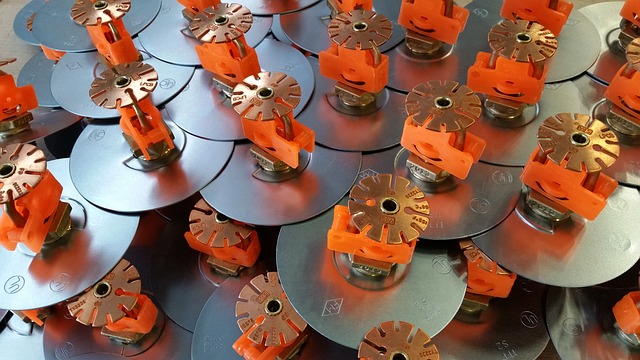
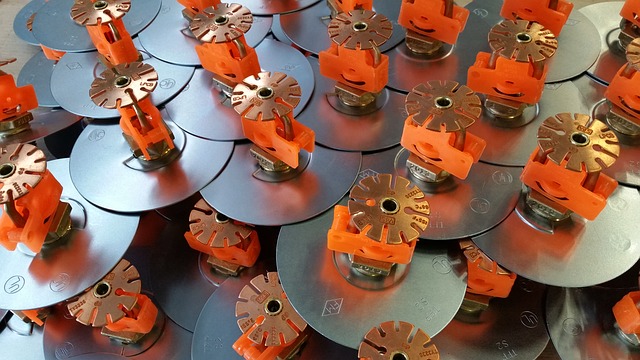
Pre-action fire sprinkler system designed for advanced fire protection, combining detection and suppression to prevent accidental water discharge.
Fire sprinkler nob


Fire protection is a critical aspect of safety in commercial and industrial spaces, and choosing the right fire suppression system can make all the difference. Among the many options available, pre-action fire sprinkler systems stand out for their advanced design and reliability. This guide will walk you through what pre-action fire sprinkler systems are, how they work, and their applications.

What Are Pre-Action Fire Sprinkler Systems?

A pre-action fire sprinkler system is a type of dry fire protection system that requires a two-step process to activate. Unlike traditional wet pipe systems, where water is stored in the pipes, a pre-action system holds water back until a fire is confirmed by a secondary fire detection method, such as a heat or smoke detector. This ensures that water only flows through the sprinklers when necessary, minimizing accidental discharges.

How Do Pre-Action Fire Sprinkler Systems Work?

The pre-action system is unique because of its two-step activation process. Here’s how it works:


    1. Fire Detection: A fire alarm or detection system, such as a smoke or heat detector, first identifies a fire.

    1. Valve Activation: Once the fire is confirmed, the pre-action valve opens, allowing water to flow into the sprinkler pipes. At this point, water is still held back from the sprinkler heads.

    1. Sprinkler Activation: Once the individual sprinkler heads reach a certain temperature, they open, releasing water directly onto the fire.

This double-trigger mechanism ensures that water is only released when absolutely necessary, preventing damage from accidental sprinkler discharge.

Types of Pre-Action Systems

There are three main types of pre-action fire sprinkler systems, each designed for specific needs:


    1. Single Interlock System: In this system, water is held back by a single valve. The valve is triggered by a fire detection system, such as a smoke detector, but water won’t flow until the sprinkler heads are activated by heat. This system is used in areas where accidental water discharge could cause severe damage.

    1. Double Interlock System: This type requires both the fire detection system and the sprinkler head to activate before water can flow through the pipes. It’s typically used in high-value areas such as data centers, where both water damage and fire damage must be minimized.

    1. Non-Interlock System: In this setup, water flows into the pipes as soon as a fire is detected, regardless of whether the sprinkler heads have been activated. It offers quick response and is used in areas where rapid fire suppression is needed.

Applications of Pre-Action Fire Sprinkler Systems

Pre-action sprinkler systems are ideal for spaces where water damage could cause as much harm as a fire. Some common applications include:


    • Data Centers: Water can be devastating to sensitive electronic equipment, so pre-action systems ensure that water is only released when necessary.

    • Libraries and Archives: Important documents, books, and art collections need protection from both fire and water damage.

    • Museums: Pre-action systems offer a reliable solution for preserving priceless artifacts while ensuring fire safety.

    • Freezer Warehouses: Traditional wet pipe systems could freeze in cold environments. Pre-action systems, with their dry pipes, are ideal for preventing this issue.

Benefits of Pre-Action Fire Sprinkler Systems


    1. Reduced Risk of Accidental Discharge: The dual-action mechanism minimizes the chance of accidental water damage.

    1. Customizable Response: Pre-action systems can be tailored to specific environments with different interlock mechanisms.

    1. Ideal for High-Value Areas: These systems are particularly useful in areas where both fire and water damage must be prevented.

Maintenance and Testing

Pre-action fire sprinkler systems require regular maintenance and testing to ensure they function properly. This includes:


    • Visual Inspections: Ensure that the system is in good condition and that there are no signs of wear or damage.

    • Valve Testing: The pre-action valve should be regularly tested to confirm that it activates correctly when needed.

    • System Testing: Full tests, including fire detection and sprinkler activation, should be carried out periodically to ensure the system is ready in case of a fire.

Conclusion

Pre-action fire sprinkler systems offer a unique and highly effective way to manage fire risks in environments where water damage is a major concern. Their dual-action mechanism ensures that fires are controlled while also minimizing the potential for accidental water discharge. By understanding the various types of pre-action systems and their applications, businesses can select the right fire protection solution to meet their specific needs.

For expert advice on installing pre-action fire sprinkler systems or for maintenance services, reach out to SRJ Piping India. Our team specializes in designing and maintaining fire protection systems tailored to your requirements.

Such risks are substantially mitigated with the installation of pre-action deluge systems. Additionally, pre-action sprinklers are also a great choice if you’re worried about leaks in the pipe. This is because such sprinklers facilitate the easy detection of water or air leaks. The locations that are most in need of pre-action sprinklers are archival vaults, museums, libraries, computer data centres, and cold storage warehouses to name a few.

Know about us more

  1. Enhancing Safety and Security: The Ultimate Guide to Fire Sprinkler Systems
    This blog provides a comprehensive overview of fire sprinkler systems, offering broader context for understanding pre-action systems specifically.
  2. Fire Safety Equipment Maintenance: Your Lifeline in a Crisis
    This blog emphasizes the importance of maintaining fire safety equipment, crucial for ensuring the reliability of pre-action fire sprinkler systems.
  3. National Fire Protection Association (NFPA) – NFPA 13 Standard for Sprinkler Systems
    NFPA 13 provides authoritative standards for the installation of sprinkler systems, including pre-action systems, essential for compliance and performance.
  4. Society of Fire Protection Engineers (SFPE) – Sprinkler System Design Resources
    SFPE offers technical resources on sprinkler system design, providing insights into the engineering behind pre-action fire sprinklers.

Related Blog

Basic Principles of a Deluge Fire Sprinkler System
This blog explains deluge sprinkler systems, complementing the discussion on pre-action systems by exploring another specialized fire suppression solution.


Need Advanced Fire Protection for Critical Areas?

SRJ Piping India designs and installs pre-action sprinkler systems ideal for sensitive environments like data centers and archives.

Comprehensive Guide to Fire Protection Systems and Services

How to Protect Your Business From Fires?

Table of Contents

Fire safety is the primary concern of any business owner. Seemingly harmless objects or everyday actions may cause most fires. But they are truly fueled by negligence and indifference. Fires result in fatalities, bodily injuries, infrastructural damage, and financial losses. That is why it pays to have a fire protection system in place.

Any commercial or non-commercial entity is incomplete without a full-fledged Fire Protection System (FPS). The myriad benefits of an FPS outweigh the potential risks of operating a business without such a system.

But if you’re still hesitant to invest and secure your establishment from fires, here are some things that you should know about such as what exactly constitutes a fire protection system, how does it actually work, and what are the different types of systems available on the market.

What is a Fire Protection System?

Simply put, the main goal of a fire protection system is to detect a fire and douse the flames. This means that the functionality of any FPS must be based on this essential principle of early detection and instantaneous suppression of fire. The design of a fire protection system varies from building to building. In other words, the process of integrating a warehouse with an FPS is not the same as installing an FPS in office spaces. However, the basic components of a fire protection system must revolve around three key objectives: detection, notification, and suppression.

A fire detection system is a critical feature of any FPS since it is the first component to initiate the system, thereby resulting in the ultimate protection of the building and its occupants from a fire. These detection systems are available in various designs and can be manually activated, automated, or both. While fire alarm pull stations and water flow detectors are of the manual type, smoke detectors are sensor-activated detection systems that minimize the risk of false alarms.

Fire Protection Systems in Bangalore:

After detecting a fire, the next objective of a fire protection system is to send out notifications about the fire and alert occupants to a potential emergency situation. This is where fire alarm systems come into the picture. A fire alarm system comprises sensory-based devices such as flashing lights or audible sirens. Nowadays, sophisticated fire alarm systems also communicate with emergency services by sending out a distress signal to the nearest fire station.

Usually, detection panels and fire alarm systems are packed into a single framework of fire protection systems. Additionally, some other components that can useful in the event of a fire are gas leak detection systems, emergency elevator systems, emergency door holders, etc.

Why should you install a Fire Sprinkler System?

Best practices for protecting your business from fire risks, including fire prevention and safety measures.
⁣⁣Best practices for protecting your business from fire risks, including fire prevention and safety measures.

A fire sprinkler system is responsible for controlling, suppressing, and finally extinguishing the fire. When an integrated fire sprinkler system does its job properly and completely douses the fire, it not only safeguards workers (and protects valuables) but also helps firefighters avoid a potentially hazardous situation. The significance of investing in a fire sprinkler system for your company is demonstrated by past occurrences of fires in the workplace. 

But it is not enough to just have a fire sprinkler system in place. In the past, most instances of a fire burning down an entire building have been a direct result of having improperly maintained or low-quality fire sprinkler systems. This goes to show that having a faulty fire sprinkler system is as dangerous as not having one at all.

Fire sprinkler systems are generally categorized into two types: water-based sprinklers and foam-based sprinklers.

Water or wet pipe fire sprinkler systems are the most common type of systems installed in buildings. Wet pipe sprinklers are connected to a network of pipes that store cold and pressurized water. The sprinklers are fitted with a plug that is sensitive to heat. This heat-sensitive plug is made of an alloy commonly referred to as Wood’s metal. When the heat reaches a particular temperature, the Wood’s metal plug melts and water is released from the sprinklers. The flowing water hits the flower-shaped metal deflector and spreads out over a larger area.

Foam-based fire sprinkler systems are commonly fitted in hazardous areas where there is potential for chemical fires to occur. This includes locations such as oil rigs, airplane hangars, chemical factories, power plants, etc. This type of fire sprinkler system works in a similar fashion to the wet pipe sprinkler system. However, instead of water being discharged to put off the flames, a mixture of water and low-expansion foam flows out of the sprinklers in order to effectively extinguish the chemical fire. The foam is generally supplied from a separately located foam bladder tank.

How do you choose the right fire extinguisher?

Best practices for protecting your business from fire risks, including fire prevention and safety measures.
⁣⁣Best practices for protecting your business from fire risks, including fire prevention and safety measures.
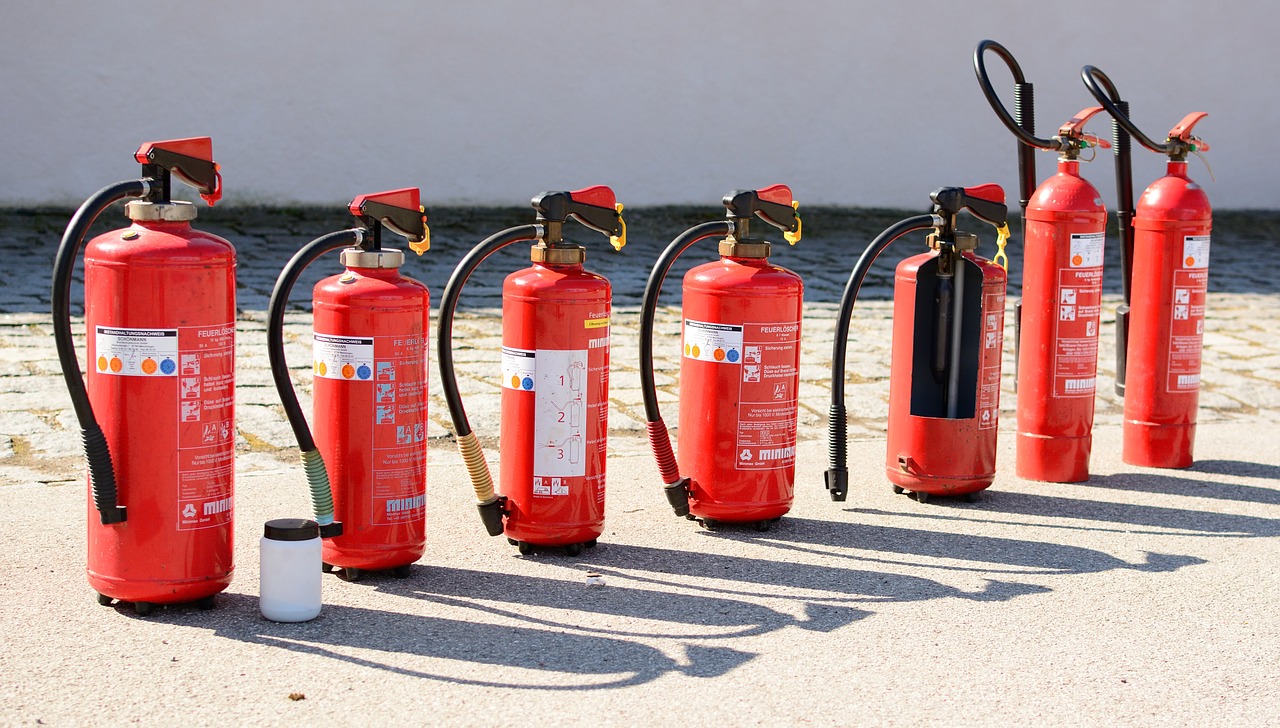
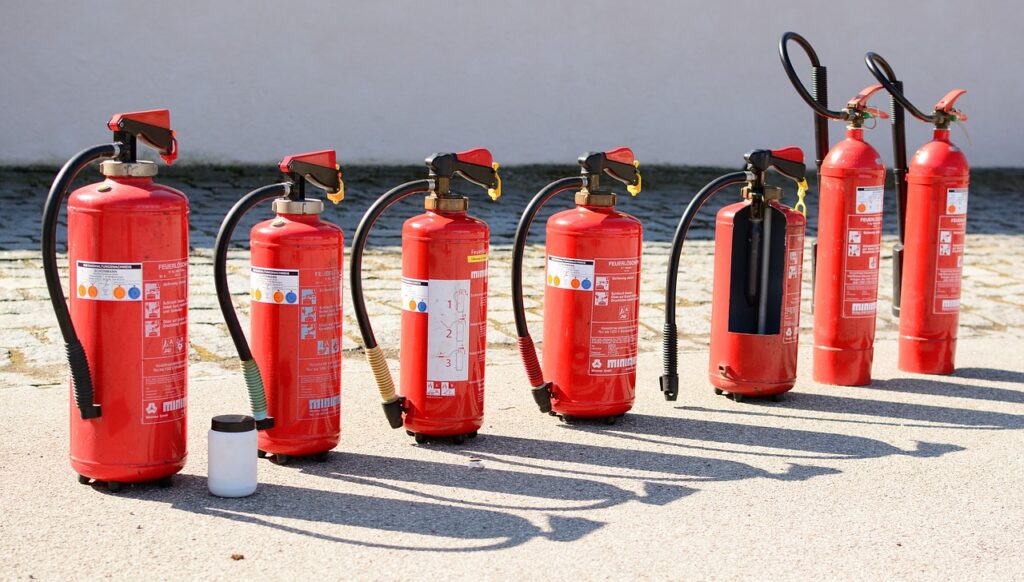
Types of fire extinguishers for different applications.

Is it still necessary to have fire extinguishers even if you’ve invested in a full-fledged fire protection system? The answer is yes. Fire extinguishers make up an integral part of a fire protection system. Often times, wall-mounted fire extinguishers go by unnoticed by the occupants of a building. But when a fire starts, this red cylinder makes the difference between a minor fire and total destruction.

Fire extinguishers can be used as the first firefighting measure taken in the event of a fire. You can think of them like a portable and easy-to-use fire protection system. Since most fires start out small before engulfing the whole area in flames, fire extinguishers are an indispensable component of a fire protection system. Best Fire Protection Systems in Bangalore: SRJ Piping India uses the size and contents of an extinguisher depending on the type of fire that could occur at the workplace. 

While water and foam fire extinguishers are used to suppress non-electrical fires, carbon dioxide and other dry chemical extinguishers are used to tackle flammable liquid or electrical fires. The location of fire extinguishers also plays a key role in a fire protection system. Fire extinguishers must be mounted at a place that is easily accessible to everyone. Various color codes are used to designate the type of fire extinguisher. It is pivotal for all workers or employees to familiarize themselves with the process of operating a fire extinguisher.

Fire Protection Systems offered by SRJ Piping India

SRJ piping India Logo SRJ Piping India[/caption

Now that you’re aware of the various types of components that constitute a fire protection system, such as a sophisticated fire alarm system, a reliable fire sprinkler system, and easy-to-use fire extinguishers, it is time to seriously consider securing your company and protecting your assets by installing a foolproof fire protection system. But more importantly, it is time you start thinking about who you want doing the installation.

If you’re still pondering over your choices, you can stop because SRJ Piping India has you covered. Known as “The Pipeline Professionals,” SRJ Piping India Pvt Ltd specializes in setting up dependable fire detection, fire alarm, and fire extinguishing systems. So if you’re looking for the best firefighting contractors in Bangalore, then look no further. We’ve been protecting businesses from fires for the past 40 years. 

As one of the best fire protection systems in Bangalore, SRJ Piping offers a wide range of turnkey solutions custom-tailored to your business needs. With top-notch engineers and professionals at our disposal, the SRJ Group is one of the best companies for fire protection systems in Bangalore and always works at a rapid pace to finish the project at the earliest convenience, without ever compromising on quality.

The SRJ Group boasts of a long and illustrious career in the field of industrial pipe systems and fire protection systems. This fact is further validated by our work carried out for multinational conglomerates such as the German engineering and technology company Robert Bosch in India. This is why the SRJ Group has garnered a reputation for being one of the best fire protection system companies in Bangalore.

Every business owner has had a nightmare of seeing his most valuable assets and his life’s work go down in literal flames. Being one of the best firefighting contractors in Bangalore, SRJ Piping India believes that it is our responsibility to save you from that nightmare by offering the best services in fire protection systems that money can buy. Our team always makes sure to keep abreast of the various standards, codes, and zonal regulations so that your fire protection system can be designed in accordance with them. 

Apart from fabricating and installing a fire protection system modified to suit your establishment’s floor plan, SRJ Group also offers its design services in fabricating microprocessor-based fire alarm systems, fire hydrant systems, and automatic sprinkler systems.

For more information on how we can help you protect your business from hazardous fires, contact us now!


Know about us more 

  1. The Importance of Fire Protection Systems in Industrial Settings
    This blog emphasizes the critical role of fire protection systems in industrial environments, providing a broader context for the services discussed in the blog.
  2. How to Choose the Right Fire Protection Contractor for Your Facility
    This blog offers practical guidance on selecting a reliable contractor, complementing the discussion on fire protection system services.
  3. National Fire Protection Association (NFPA) – Codes and Standards
    NFPA provides authoritative standards for fire protection systems, essential for ensuring the quality and compliance of fire protection services.
  4. Federal Emergency Management Agency (FEMA) – Fire Prevention Resources
    FEMA offers resources on fire prevention and safety, providing valuable insights for implementing effective fire protection services.
Related Blog

Fire Safety Equipment Maintenance: Your Lifeline in a Crisis
This blog focuses on the importance of maintaining fire safety equipment, a key component of fire protection services, complementing the blog’s discussion.

Is Your Business Fire-Ready?

SRJ Piping India helps businesses implement reliable fire protection systems to safeguard people, property, and operations.