SRJ Piping India company logo – leaders in fire protection, industrial piping, and heavy structural fabrication solutions

Fire Suppression Systems: Protecting Lives and Property When It Matters Most

Fire Suppression Systems: Protecting Lives and Property When It Matters Most

Table of Contents
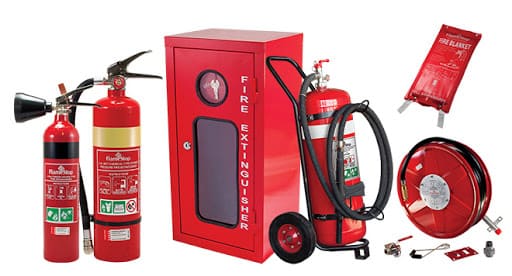
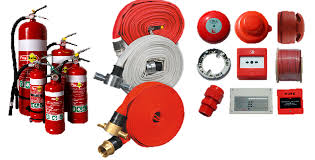
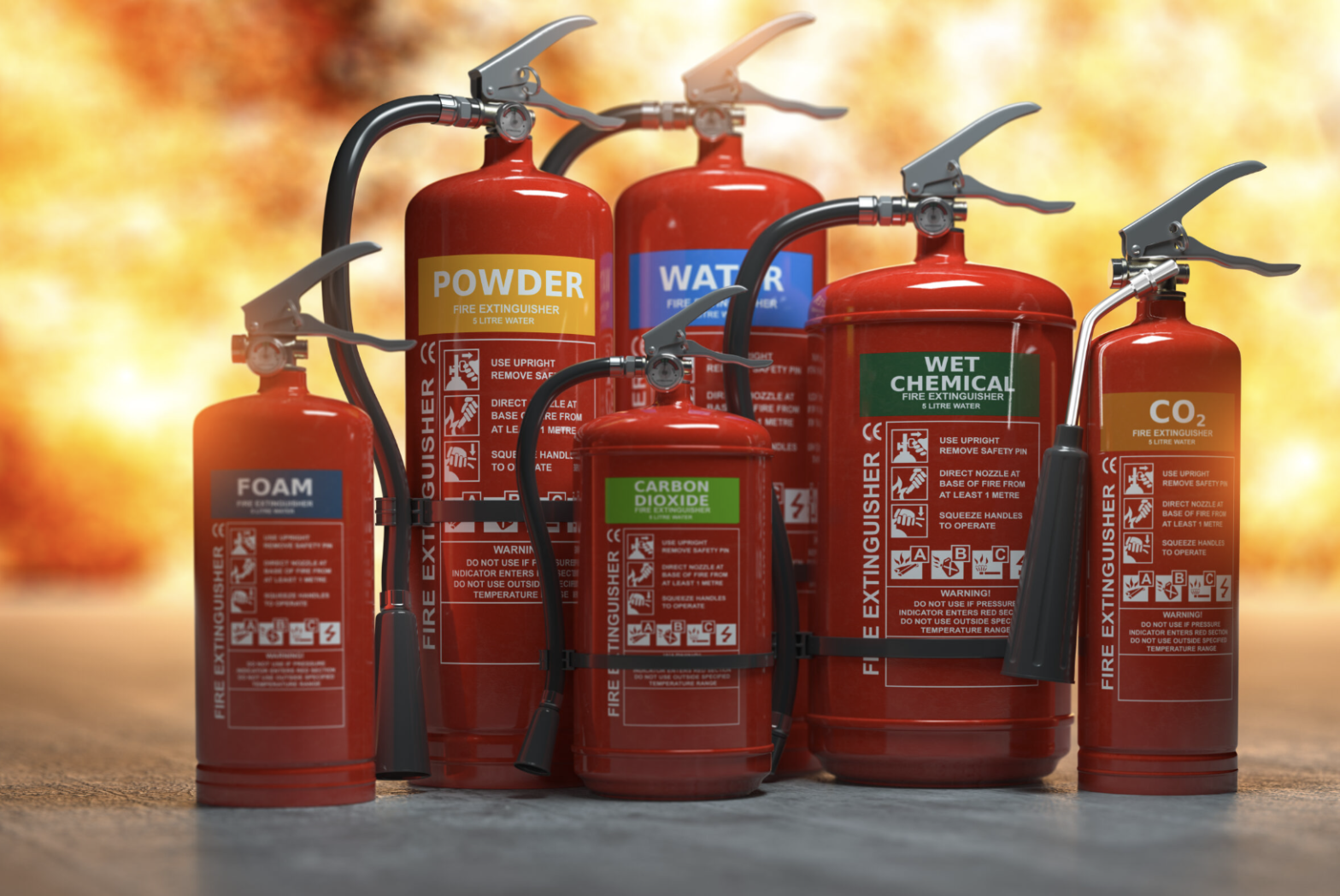
srj group types of fire extinguishers

Fire has been a double-edged sword for humanity throughout history. While it has been a source of warmth, light, and progress, it also poses one of the greatest threats to our safety and property. In the modern world, we have devised sophisticated systems to mitigate this threat, and chief among them are fire suppression systems. In this blog, we’ll dive into the world of fire suppression systems, understanding how they work and why they are vital for protecting lives and property.

The Silent Heroes

Fire suppression systems often remain unnoticed until they are needed most. These silent heroes stand ready to spring into action when the flames of destruction threaten to engulf everything in their path. They are not just sprinklers on the ceiling or red tanks tucked away in corners; they are meticulously engineered systems designed to fight fire with precision and efficiency. 

Types of Fire Suppression Systems

There isn’t a one-size-fits-all solution when it comes to fire suppression systems. Different settings and hazards demand different approaches. Here are some common types:

1. Water-Based Systems: These systems, which include wet pipe, dry pipe, and pre-action systems, use water as the primary extinguishing agent. They are effective for ordinary combustibles like wood and paper.

2. Gas-Based Systems: Systems like CO2 and clean agent systems use gases to displace oxygen, suppressing the fire by removing its essential element. They are ideal for protecting valuable assets and sensitive equipment.

3. Foam-Based Systems: Foam is highly effective against flammable liquids and is commonly used in industries where these substances are present. 

4. Sprinkler Systems: Automatic sprinkler systems are the most common and are used in a wide range of settings, from commercial buildings to residential homes.

5. Water Mist Systems: These systems use fine water droplets to suppress fires and are especially useful in environments where water damage must be minimized.

How Fire Suppression Systems Work

The effectiveness of fire suppression systems lies in their rapid response and targeted action. When a fire is detected, the system activates automatically. Here’s a simplified breakdown of how some of these systems work:

1. Sprinkler Systems: Individual sprinkler heads are heat-activated. When the temperature at a sprinkler head exceeds a predetermined level, that sprinkler head releases water directly onto the fire, helping to control or extinguish it.

2. Gas-Based Systems: These systems typically work in one of two ways—either by displacing oxygen or by cooling the fire. In the case of CO2 systems, the gas starves the fire of oxygen. Clean agent systems, on the other hand, disrupt the chemical reaction of the fire.

3. Foam-Based Systems: Foam systems combine foam concentrate and water to create a foam blanket that smothers the fire. The foam’s ability to cover the fire and prevent oxygen from reaching it makes it highly effective.

The Importance of Regular Maintenance

While fire suppression systems are incredibly reliable, they are not “set and forget” installations. Regular maintenance, including inspections, testing, and refilling of extinguishing agents, is crucial to ensure these systems are always ready to perform when needed. Neglecting maintenance can lead to catastrophic consequences.

Conclusion

Fire suppression systems are a testament to human ingenuity and a lifeline in the face of one of the most destructive forces on Earth. They silently stand guard, ready to leap into action, and their effectiveness cannot be overstated. Whether in your home, workplace, or industrial facility, these systems are a vital part of the safety net that protects lives and property. Regular maintenance is the key to keeping these systems at their peak performance, ensuring that they continue to be the unsung heroes that save the day when fire threatens to consume all in its path.

Every drop from your water treatment plant carries a life-or-death responsibility—the WHO reports that contaminated water kills 485,000 people annually, while CPCB data shows 62% of India’s urban water fails BIS 10500 standards. At SRJ, we engineer water treatment plants that don’t just meet regulations but predict and neutralize threats 48 hours before they occur through:

3 Revolutionary Shifts in Water Treatment

  1. AI-Powered Contaminant Detection

    • Real-time mass spectrometry identifying 1,200+ pollutants (beyond IS 10500:2012)

    • Predictive algal bloom modeling with 92% accuracy

  2. Zero-Chemical Purification

    • Graphene oxide membranes removing 99.97% microplastics

    • UV-LED disinfection cutting chlorine use by 70% (EPA-validated)

  3. Smart Distribution Guardians

    • IoT pressure sensors detecting pipe leaks within 15 minutes

    • Automated dosing systems adjusting to raw water quality swings

When a Maharashtra township adopted our Advanced Treatment Package, they reduced waterborne diseases by 83% and recycled 9.8 million liters/day—proving clean water isn’t just infrastructure, it’s a fundamental human right engineered in steel and silicon.

Ready to Fortify Your Facility With Fire Protection?

SRJ Piping India installs mission-critical fire suppression systems that save lives and protect property when every second counts.
Fire Safety Equipment Maintenance: Your Lifeline in a Crisis

Fire Safety Equipment Maintenance: Your Lifeline in a Crisis

Table of Contents

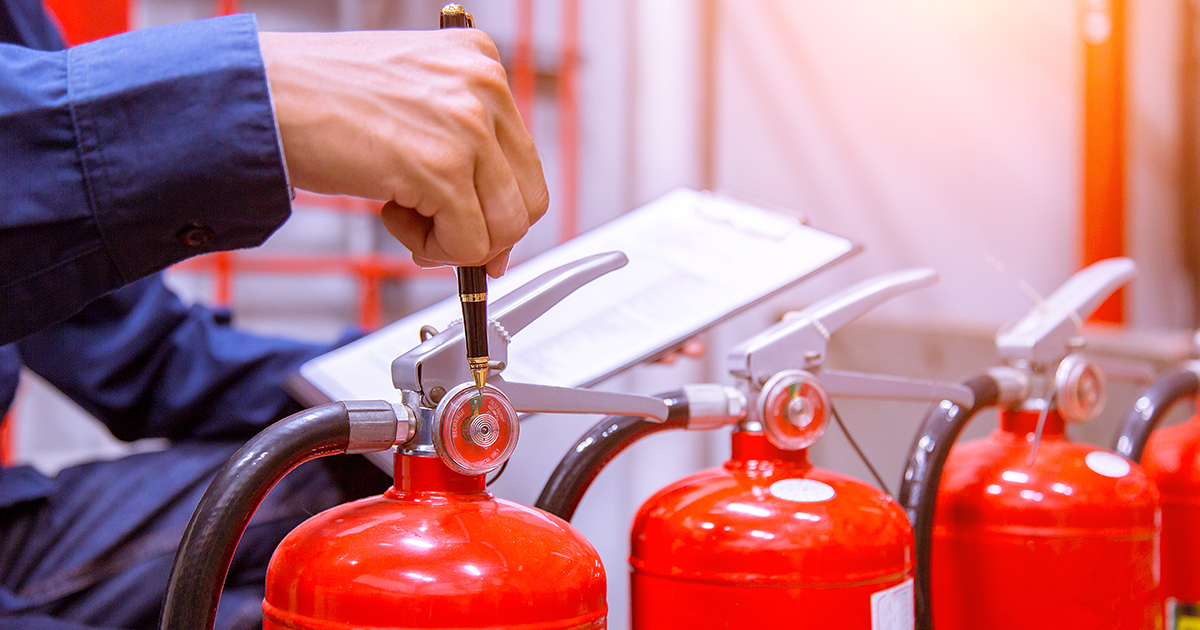
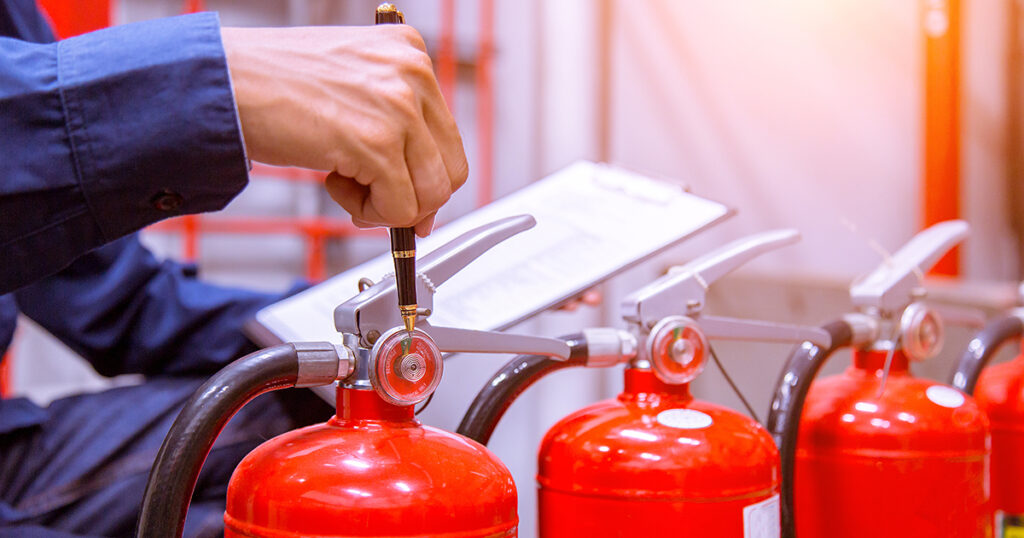
Engineer checking Industrial fire control system,Fire Alarm cont

Fire safety equipment is a crucial aspect of any building’s infrastructure. It’s not just about complying with regulations; it’s about ensuring the safety of the people who live or work within the premises. Fire emergencies can happen at any time, so you need to have faith in your fire safety equipment. The key to that trust is regular maintenance.

Why Maintenance Matters

Imagine a scenario where a fire breaks out, and your fire extinguisher fails to work, or your fire alarm system doesn’t trigger. This can lead to catastrophic consequences. Fire safety equipment, when properly maintained, can be the difference between life and death during a fire emergency.

Maintenance is essential for various reasons:

1. Reliability: Regular maintenance ensures that your fire safety equipment will perform as intended when you need it the most. This reliability is critical for the safety of everyone in the building.

2. Legal Compliance: Many countries and regions have strict regulations regarding fire safety equipment. Regular maintenance is often a legal requirement, and non-compliance can lead to severe penalties.

3. Cost-Effective: Proper maintenance extends the lifespan of your equipment, reducing the need for frequent replacements. It’s more cost-effective to invest in maintenance than to buy new equipment frequently.

4. Peace of Mind: Knowing that your fire safety equipment is well-maintained provides peace of mind. It’s one less thing to worry about in the event of a fire emergency.

Types of Fire Safety Equipment Requiring Maintenance

Let’s take a closer look at some common fire safety equipment that requires regular maintenance:

1. Fire Extinguishers: Fire extinguishers are your first line of defense against small fires. Regular checks ensure they are pressurized, have the correct chemical agent, and are free from damage or corrosion.

2. Fire Alarms: Fire alarm systems need periodic testing to ensure they detect smoke or heat accurately and trigger alarms effectively.

3. Fire Sprinkler Systems: These systems should be inspected for leaks, corrosion, and functionality. They are often tested through a process known as a “flow test.”

4. Emergency Lighting: In the event of a power outage during a fire, emergency lighting guides occupants to safety. Routine checks of battery-powered lights are crucial.

5. Fire Suppression Systems: These specialized systems, such as gas or foam suppression, require regular inspections to ensure they are operational and won’t inadvertently harm occupants.

The Maintenance Process

Fire safety equipment maintenance typically involves several steps:

1. Inspection: Regular visual inspections can catch obvious issues like damage, corrosion, or missing components.

2. Testing: Equipment like fire alarms and sprinkler systems require functional testing to ensure they operate as intended.

3. Cleaning: Keeping equipment clean helps prevent corrosion and ensures smooth operation.

4. Repairs and Replacements: If any faults or damage are found during inspections, prompt repairs or replacements are necessary.

5. Documentation: Proper records of maintenance activities must be maintained for compliance purposes.

Hiring Professionals

While some basic visual inspections can be done by building staff, it’s advisable to hire professionals for more in-depth maintenance. Certified fire safety professionals have the knowledge and tools to thoroughly inspect, test, and maintain your equipment.

Conclusion

Fire safety equipment maintenance is not just a routine chore; it’s a lifeline that ensures the well-being of everyone in a building. Neglecting maintenance can have severe consequences, both in terms of safety and potential legal repercussions. Regular inspections and servicing give you the confidence that your fire safety equipment will perform when it matters most. Don’t gamble with safety; invest in proper maintenance to protect lives and property.

Your fire extinguisher’s expired service tag isn’t just a violation—it’s a countdown to catastrophe. The NFPA 25 Standard proves 71% of fire system failures trace to lapsed maintenance—a statistic written in the ashes of a ₹92Cr Bangalore factory fire (Karnataka Fire Dept. Report). At SRJ, our FM Global-Certified Maintenance Team enforces these non-negotiable lifelines:

5 Maintenance Make-or-Break Moments

  1. Hydraulic Calculations

    • Annual water flow tests ensuring 1,500 GPM at 45 PSI (per IS 2189)

    • Our Laser Pipe Scanning detects 0.2mm corrosion before it fails

  2. Suppression System Threats

    • Frozen FM200 tanks (-40°C tests)

    • CO2 leakage exceeding 10%/year = mandatory recharge

  3. Alarm System Killers

    • Dust-choked smoke detectors (clean every 90 days)

    • 5V power drop in addressable panels

  4. Structural Weak Points

    • Fire damper actuators failing 200+ operation cycles

    • Sprinkler pipe hangers corroding at 1.5mm/year

  5. Human Factor

This isn’t maintenance—it’s crisis insurance where every inspection sticker carries the weight of lives and livelihoods.

Is Your Fire Safety Equipment Emergency-Ready?

SRJ Piping India provides expert maintenance services to keep your fire safety equipment fully functional when every second counts.

Ensuring Fire Safety in Bangalore: The Need for Effective Regulations

The Importance of Fire Safety Equipment Maintenance

Table of Contents

fire extinguisher

Fire safety equipment is critical for ensuring the safety of people and property in any building. While fire protection systems are designed to prevent fires from spreading, they only work effectively when maintained regularly. Proper maintenance not only ensures compliance with regulations but also provides peace of mind that your fire safety equipment will perform when needed.

Why Regular Maintenance of Fire Safety Equipment Matters

Imagine a scenario where a fire breaks out, but your fire extinguisher malfunctions or your fire alarm system doesn’t trigger. This can lead to disastrous consequences, including property damage and loss of life. Regular maintenance of fire safety equipment can make all the difference between containing a small fire or facing a catastrophic event.

Reliability: Fire safety equipment that is regularly maintained is far more reliable. You need to trust that your fire extinguishers, alarms, and sprinklers will function as intended during a fire emergency.

Compliance with Regulations: Many local and national laws mandate regular fire safety equipment inspections. Failure to comply with these regulations could result in penalties, fines, or even the shutdown of your facility.

Cost-Effective: Regular maintenance extends the lifespan of fire safety equipment, reducing the need for costly replacements. While it may seem like an additional expense, investing in maintenance is far cheaper than dealing with fire-related damage.

Peace of Mind: Knowing that your fire safety equipment is in optimal condition provides peace of mind. In the event of a fire, you can rest assured that your fire extinguishers, alarms, and sprinklers will perform as expected.

For more on regulatory compliance, check out the National Fire Protection Association guidelines for fire safety maintenance.

Types of Fire Safety Equipment That Need Maintenance

There are several types of fire safety equipment that require regular inspection and upkeep to ensure they are functioning correctly.


      1. Fire Extinguishers
        These need to be checked periodically for pressure levels, corrosion, and the correct type of extinguishing agent. Damaged or empty fire extinguishers are ineffective during emergencies.

      1. Fire Alarm Systems
        Regular testing ensures that fire alarms detect smoke and heat accurately and alert the occupants in time. Malfunctioning alarms could delay evacuation, leading to devastating consequences.

      1. Fire Sprinkler Systems
        Fire sprinkler systems should be inspected for leaks, corrosion, and operational issues. A malfunctioning sprinkler could fail to control a fire in its early stages.

      1. Emergency Lighting
        Emergency lighting helps guide people to safety during a fire, especially if the power goes out. These lights should be tested regularly to ensure they work when needed.

      1. Fire Suppression Systems
        Fire suppression systems, such as gas or foam systems, require regular inspections to ensure they are operational and safe for occupants.

    Steps for Maintaining Fire Safety Equipment

    Maintaining fire safety equipment is essential for ensuring it works properly during an emergency. The process typically involves several steps:


        1. Visual Inspection: Regular visual inspections help identify obvious issues such as damage, corrosion, or missing parts.

        1. Functional Testing: This involves testing the equipment—such as fire alarms and sprinkler systems—to ensure they operate as intended.

        1. Cleaning: Cleaning fire safety equipment prevents corrosion and ensures smooth operation. Dust and debris can interfere with the functionality of devices like smoke detectors.

        1. Repairs and Replacements: Any faults or damages found during inspections must be promptly repaired. Replace parts as needed to keep systems operational.

        1. Documentation: Keeping records of all maintenance activities is important for compliance. These documents serve as proof of your commitment to maintaining a safe environment.

      The Risks of Neglecting Maintenance

      Neglecting fire safety equipment maintenance can have severe consequences:


          • Equipment Failure: Without maintenance, there’s a risk that equipment may fail when it is needed most, leading to uncontrollable fires and extensive damage.

          • Legal and Financial Penalties: Non-compliance with fire safety regulations can result in hefty fines and legal repercussions.

          • Higher Replacement Costs: Damaged or poorly maintained equipment often needs to be replaced sooner, costing you more in the long run.

        By investing in regular maintenance, you can avoid these risks and ensure your building’s safety.

        Conclusion

        Fire safety equipment maintenance is not an option—it’s a necessity. Regular upkeep ensures the reliability of your systems, extends their lifespan, and keeps you compliant with safety regulations. Ultimately, well-maintained fire safety equipment can save lives, protect property, and give you peace of mind.

        For professional fire safety maintenance services, visit Fire Safety Maintenance Experts and ensure your equipment is always in top shape.

        Every 90 seconds, a child dies from waterborne diseases – yet 38% of India’s urban water fails IS 10500 standards (CPCB 2023). At SRJ, we engineer water treatment plants that don’t just filter water, but predict and neutralize threats 72 hours before they reach communities. Our AI-Optimized Treatment Systems combine three revolutionary approaches:

        1. Smart Contaminant Hunting

        • Mass spectrometry detecting 1,500+ pollutants (beyond BIS 10500:2012)

        • Predictive algorithms forecasting algal blooms with 94% accuracy

        1. Zero-Waste Purification

        • Graphene membranes removing 99.9% microplastics

        • UV-LED reactors cutting chemical use by 65% (WHO-approved)

        1. Self-Healing Distribution

        • IoT sensors detecting pipe leaks within 12 minutes

        • Automated chlorine dosing balancing safety and taste

        When a Rajasthan township adopted our Advanced Treatment Package, waterborne illnesses dropped 81% within a year – proving clean water isn’t infrastructure, it’s a fundamental human right engineered in steel and smart sensors.

        Fire Safety Equipment Can’t Wait for a Crisis

        SRJ Piping India offers timely maintenance services to ensure your fire safety systems are always ready when it matters most.

        Understanding the Importance of Water Treatment Plants

        The Critical Role of Water Treatment Plants in Ensuring Clean Water

        Water is a fundamental resource for life, and ensuring its cleanliness and safety is crucial for public health and environmental sustainability. Water treatment plants play an essential role in this process, working tirelessly to provide clean and safe water for communities. In this blog, we’ll explore the importance of water treatment plants, their functions, and their significant impact on maintaining a reliable water supply.

        Discover advanced chemical piping systems designed for the safe and efficient transport of chemicals in industrial environments. Learn about solutions that ensure compliance, safety, and reliability

        Why Water Treatment Plants Matter

        Water treatment plants perform several critical functions that directly influence public health, environmental protection, and water security. Understanding their role helps underscore why they are essential to modern infrastructure.

        1. Protecting Public Health

        Water treatment plants ensure that the water we drink, cook with, and bathe in is free from harmful contaminants. Raw water from natural sources like rivers, lakes, and groundwater often contains bacteria, viruses, heavy metals, pesticides, and other pollutants that can pose significant health risks. These plants use advanced purification methods to remove these hazards, ensuring communities have access to safe, clean water.

        1. Preserving the Environment

        In addition to providing safe drinking water, treatment plants protect the environment by filtering pollutants from water before releasing it back into natural ecosystems. By removing harmful chemicals and waste products, treatment plants prevent pollution in rivers, lakes, and oceans. This also helps preserve aquatic ecosystems and protect wildlife from toxic substances.

        For example, untreated water can lead to the degradation of aquatic life, while treated water ensures the sustainability of ecosystems. The efforts of water treatment plants thus play a key role in environmental conservation.

        1. Meeting Legal and Regulatory Standards

        Water treatment plants must comply with stringent regulations set by government agencies to ensure the water supplied is safe for consumption. Regulatory bodies like the Environmental Protection Agency (EPA) set specific limits on the levels of contaminants allowed in drinking water. Water treatment plants must regularly test, monitor, and report on water quality to ensure compliance with these regulations.

        Failure to meet these standards can result in penalties and risks to public health, so adherence to these regulations is critical. To learn more about water quality standards, visit the EPA Water Quality Standards.

        The Key Functions of Water Treatment Plants

        Water treatment plants use a variety of processes to purify water, ensuring it meets the necessary safety standards. Each step plays an important role in the treatment cycle.

        1. Sedimentation

        Sedimentation is the initial stage where large particles like dirt and sand settle at the bottom of treatment tanks. This simple yet effective process reduces water turbidity, making the subsequent treatment stages more efficient.

        1. Filtration

        Once sedimentation is complete, water passes through filtration systems. These filters consist of layers of sand, gravel, and charcoal that remove smaller particles, bacteria, and other impurities. This step ensures the water is clear and free from most harmful substances.

        1. Disinfection

        The final stage involves adding disinfectants like chlorine to kill any remaining bacteria and viruses. Disinfection is crucial for ensuring that harmful pathogens do not reach the public water supply. It is one of the most critical processes in ensuring water safety.

        For a more detailed explanation of the water treatment process, you can visit the World Health Organization’s Water Treatment Guidelines.

        Ensuring a Reliable Water Supply

        Water treatment plants are designed to process large volumes of water to meet community demand, ensuring a reliable and consistent supply. Whether for household use, industrial purposes, or emergencies, water treatment plants ensure communities have uninterrupted access to clean water.

        During peak usage periods or in times of drought, water treatment plants help manage water supply efficiently. Their ability to provide a steady stream of safe water is a cornerstone of public infrastructure.

        Emergency Preparedness

        In times of natural disasters or outbreaks of waterborne diseases, water treatment plants become even more critical. They are equipped with contingency plans and backup systems to maintain the water supply during emergencies. This is essential for public safety, as access to clean water is vital in these situations.

        For instance, during floods or droughts, water treatment plants adjust their operations to continue providing safe water. Their role in emergency preparedness helps communities stay resilient during challenging times.

        Conclusion

        Water treatment plants are indispensable in ensuring clean and safe water for communities. By protecting public health, preserving the environment, and adhering to strict regulatory standards, they play a pivotal role in modern infrastructure. Regular maintenance, compliance, and innovation are crucial to the continued effectiveness of water treatment plants, ensuring they can meet the growing needs of society.

        Water treatment plants play a crucial role in ensuring safe, clean, and sustainable water supply for industrial and commercial applications. Companies like SRJ Piping India specialize in designing and constructing efficient water treatment systems that remove contaminants and improve water quality. Proper industrial piping integration enhances the efficiency and reliability of these plants. Adhering to global standards such as WHO water quality guidelines and Central Pollution Control Board (CPCB) regulations ensures compliance and promotes sustainable water management.

        Protecting What Matters: Understanding Fire Protection Systems

        Fire Protection Systems for Buildings: Safeguarding Lives and Property

        Table of Contents

        Fire is a force capable of causing unimaginable destruction, making fire protection systems an essential part of any building’s safety infrastructure. Whether you are a property owner, manager, or tenant, it’s crucial to understand how these systems work and why they are necessary. In this blog, we’ll explore the importance of fire protection systems, the types available, and how to choose the right one for your building.

        Latest advancements in fire fighting technology and techniques.

        Why Are Fire Protection Systems Essential?

        Fire protection systems play a critical role in detecting, controlling, and extinguishing fires. They not only protect property but also save lives. Here are some key reasons why fire protection systems are essential:

        1. Life Safety

        The primary goal of any fire protection system is to protect the occupants of a building. Systems like fire alarms, smoke detectors, and sprinklers can detect fires early, allowing occupants to evacuate safely before the situation worsens.

        2. Property Protection

        Fires can cause severe damage to buildings and their contents. With fire protection systems in place, the spread of fire is minimized, which can significantly reduce property damage and the associated financial losses.

        3. Compliance with Regulations

        Many local and national fire safety codes mandate the installation of fire protection systems in both commercial and residential buildings. Compliance with these regulations is not only a legal requirement but also critical for ensuring the safety of the building’s occupants.

        4. Insurance Requirements

        Insurance companies often require fire protection systems as part of their coverage conditions. Having a system installed can help reduce premiums and ensure that you are fully covered in the event of a fire.

        Types of Fire Protection Systems

        There are various types of fire protection systems available, each designed to address different fire risks. Below are some of the most common systems:

        1. Fire Alarm Systems

        Fire alarms detect the presence of smoke, heat, or flames and alert building occupants through audible and visual signals. They can also be integrated with other fire protection systems, such as sprinklers, for a more comprehensive safety solution.

        2. Sprinkler Systems

        Sprinkler systems are highly effective in controlling and extinguishing fires. When a fire is detected, the sprinklers release water to suppress the flames. This system is ideal for minimizing property damage and controlling the spread of fire until firefighters arrive.

        3. Fire Extinguishers

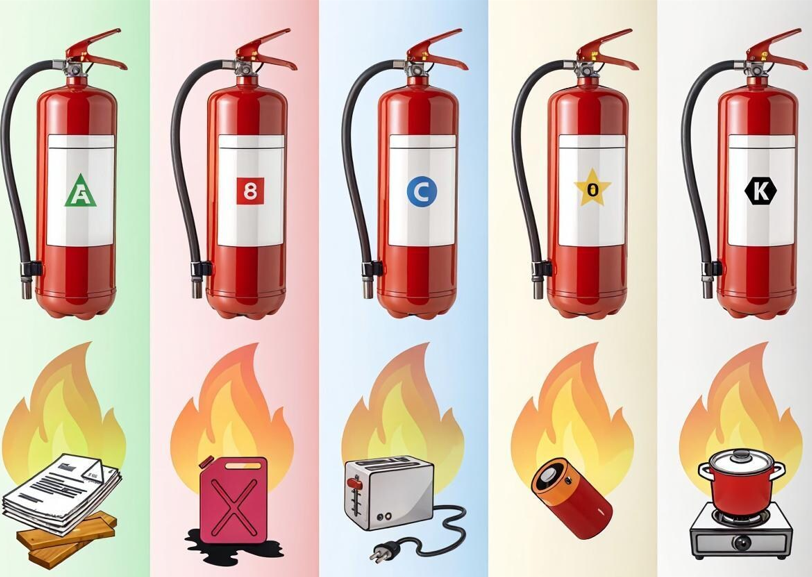
        Portable fire extinguishers are designed to tackle small fires before they spread. They come in different classes, including Class A (ordinary combustibles), Class B (flammable liquids), and Class C (electrical fires). Fire extinguishers should be strategically placed throughout a building for quick access during an emergency.

        4. Fire Suppression Systems

        Fire suppression systems use specialized agents, such as clean gases or foam, to suppress fires in sensitive areas like server rooms, kitchens, or data centers. These systems are designed to quickly suppress fires while minimizing damage to equipment.

        5. Smoke Control Systems

        Smoke control systems manage the movement of smoke in a building, keeping evacuation routes clear and providing safer egress for occupants. These systems can include smoke curtains, smoke dampers, or pressurization systems to prevent smoke from spreading.

        How to Choose the Right Fire Protection System

        Selecting the correct fire protection system for your building requires careful consideration of several factors. Here are key points to consider:

        1. Conduct a Risk Assessment

        Evaluate the fire risks in your building by identifying potential hazards, such as flammable materials or electrical systems. This will help determine the level of fire protection required.

        2. Understand Building Codes

        Ensure that your fire protection system complies with local building codes and regulations. These codes will guide the type, design, and installation of the system in your specific building type.

        3. Integrate Systems for Full Coverage

        For maximum protection, consider integrating multiple fire protection systems. For example, combining fire alarms with sprinkler systems can provide a comprehensive fire response plan.

        4. Maintenance and Inspections

        Regular maintenance and inspections are crucial to keeping your fire protection system functional. Consider the long-term costs of maintaining your system and ensure it is easily serviced by qualified professionals.

        5. Training and Education

        Educating occupants and staff on fire safety is just as important as having a fire protection system. Ensure they know how to use fire extinguishers, respond to alarms, and evacuate safely in an emergency.

        Importance of Fire Protection Piping Systems – SRJ

        When it comes to fire protection, having a reliable fire protection piping system is essential. At SRJ Piping India, we offer high-quality piping systems designed for efficient fire suppression. Our systems are built to ensure consistent water flow and quick response times during a fire emergency. To learn more, visit our page on fire protection piping solutions.

        For more information about fire safety regulations, you can explore NFPA’s Fire Safety Standards.

        Conclusion

        Fire protection systems are essential for safeguarding lives, property, and ensuring compliance with regulations. Whether it’s fire alarms, sprinklers, or suppression systems, choosing the right system for your building will provide peace of mind and reduce the risks associated with fire. Remember, regular maintenance and inspections are just as important as the initial installation.

        For expert advice on installing fire protection systems, consult SRJ’s Fire Protection Services. Don’t wait until it’s too late—invest in the safety of your building and its occupants today.

        Need Reliable Fire Protection for Your Building?

        SRJ Piping India delivers end-to-end fire protection systems that safeguard both life and property—built to code, tested for crisis.

        Top Structural Fabrication Trends for 2025

        Top Trends in Structural Fabrication for 2025 | SRJ Piping India

        Top Trends in Structural Fabrication for 2025

        Discover the innovations reshaping the future of structural steel and piping fabrication

        Structural Fabrication Trends 2025

        The evolving landscape of structural fabrication technology

        Introduction: The Changing Face of Fabrication

        The structural fabrication industry is undergoing a radical transformation as we approach 2025. At SRJ Piping India, we're at the forefront of these changes, implementing cutting-edge technologies to deliver superior quality and efficiency.

        According to recent McKinsey research, the global fabrication market is projected to grow at 6.2% CAGR through 2025, driven by these technological advancements.

        Key Takeaways

        • Automation will handle 45% of fabrication tasks by 2025 (up from 28% in 2022)
        • Sustainable materials account for 35% of new projects
        • Digital twin adoption has grown 300% since 2020
        • Modular construction reduces project timelines by 40%

        1. Advanced Automation & Robotics

        The fabrication floor of 2025 will be dominated by collaborative robots (cobots) working alongside human technicians. At SRJ Piping, we've already implemented:

        • Automated plasma cutting systems with 0.1mm precision
        • Robotic welding arms with AI vision systems
        • Autonomous material handling vehicles

        These technologies have increased our production efficiency by 32% while reducing material waste by 18%. Industry reports show similar benefits across the sector.

        Robotic welding in fabrication

        Robotic welding systems now achieve precision beyond human capabilities

        2. Next-Gen Materials & Composites

        Material science breakthroughs are enabling stronger, lighter, and more durable structures:

        Material Advantages Applications
        High-Strength Low-Alloy (HSLA) Steel 30% lighter, 20% stronger than conventional steel Bridges, high-rises, industrial plants
        Fiber-Reinforced Polymers Corrosion-resistant, 1/5 the weight of steel Marine structures, chemical plants
        Self-Healing Concrete Automatically repairs cracks Foundations, infrastructure

        Our materials division is testing graphene-enhanced steel that could revolutionize structural integrity.

        3. Sustainable Fabrication Practices

        With increasing environmental regulations, green fabrication is no longer optional. Key developments include:

        • Zero-waste fabrication processes
        • Solar-powered fabrication plants
        • Closed-loop water recycling systems
        • Low-carbon steel production methods

        International Piping recently achieved ISO 14001 certification for our environmental management system, reducing our carbon footprint by 42% since 2020.

        Sustainable fabrication

        Modern fabrication plants incorporate renewable energy sources

        4. Digital Twin Technology

        Digital twins are virtual replicas of physical structures that enable:

        • Real-time performance monitoring
        • Predictive maintenance scheduling
        • Stress testing before physical construction
        • Lifetime structural health tracking

        Our digital fabrication services now include digital twins for all major projects, reducing onsite errors by 65%.

        5. Modular & Prefabricated Construction

        The shift to offsite fabrication continues to accelerate with benefits including:

        • 40% faster project completion
        • 30% cost reduction
        • Higher quality control
        • Reduced weather delays

        Our modular fabrication facility in Pune can produce complete structural modules up to 80 tons for shipment to job sites.

        Modular construction

        Prefabricated structural components ready for assembly

        6. AI-Driven Design Optimization

        Artificial intelligence is transforming structural design through:

        • Generative design algorithms
        • Material optimization
        • Load analysis automation
        • Failure prediction models

        Our partnership with Autodesk has enabled us to reduce material usage by 22% while maintaining structural integrity.

        7. Smart Safety Innovations

        2025 will see widespread adoption of:

        • IoT-enabled PPE that monitors worker vitals
        • Augmented reality safety training
        • Predictive hazard detection systems
        • Exoskeletons for heavy lifting

        These technologies have helped SRJ Piping achieve 500+ accident-free days at our largest facility.

        Smart safety gear

        Next-generation safety equipment with built-in sensors

        SRJ Piping India's advanced fabrication capabilities can help you stay ahead of these industry trends.

        Contact Our Experts Today

        Looking Beyond 2025

        The structural fabrication industry shows no signs of slowing its innovation pace. Emerging technologies to watch include:

        • 3D printed steel structures
        • Self-assembling nano-materials
        • Quantum computing for structural analysis
        • Bio-inspired structural designs

        At SRJ Piping, we're already investing in R&D to bring these future technologies to market.

        Expert Q&A

        Q: How quickly should fabricators adopt these 2025 trends?

        A: The transition should be gradual but deliberate. Start with pilot projects in automation and digital twins, as these offer the fastest ROI (typically 12-18 months). Our consulting team can help develop a customized adoption roadmap.

        Q: What's the biggest barrier to implementing these technologies?

        A: Workforce training is the most common challenge. We recommend partnering with technical institutes and implementing comprehensive upskilling programs alongside technology adoption.

        Q: Are these trends relevant for small-scale fabricators?

        A: Absolutely. Many technologies like cloud-based design software and modular approaches are scalable and affordable. The key is focusing on solutions that address your specific pain points.

        All That You Need To Know About Fire Extinguishers

        All That You Need To Know About Fire Extinguishers | SRJ Piping India

        All That You Need To Know About Fire Extinguishers

        Your Comprehensive Guide to Fire Extinguisher Types, Uses, Maintenance, and Safety Compliance

        Fire Extinguisher Types Infographic

        Visual guide to different types of fire extinguishers and their uses

        Why Fire Extinguishers Matter

        Fire extinguishers are the first line of defense against small fires, capable of preventing catastrophic damage when used properly. According to the National Fire Protection Association (NFPA), portable fire extinguishers can effectively control or extinguish about 95% of fires that occur when they are:

        • The right type for the fire
        • Properly maintained
        • Easily accessible
        • Used by trained personnel

        At SRJ Piping India, we've seen firsthand how properly installed and maintained fire protection systems can save lives and property. Our fire protection services have helped numerous industrial and commercial facilities achieve optimal safety standards.

        Key Statistics

        • Fires cause billions in property damage annually worldwide
        • Over 60% of businesses never recover after a major fire incident
        • Proper fire extinguisher use can reduce fire damage by up to 80%
        • Most fire-related deaths are caused by smoke inhalation rather than burns

        Types of Fire Extinguishers

        Fire extinguishers are classified based on the type of fires they're designed to combat. Understanding these classifications is crucial for effective fire safety.

        Class A: Ordinary Combustibles

        Designed for fires involving ordinary combustibles like wood, paper, cloth, rubber, and many plastics. These extinguishers typically use water or dry chemical agents.

        Common locations: Offices, schools, homes, libraries

        Class B: Flammable Liquids

        Effective against fires involving flammable liquids such as gasoline, oil, grease, tar, oil-based paints, and flammable gases. These extinguishers use foam, dry chemical, or carbon dioxide.

        Common locations: Kitchens, garages, laboratories, industrial sites

        Class C: Electrical Equipment

        Designed for fires involving energized electrical equipment like appliances, wiring, circuit breakers, and outlets. These extinguishers use non-conductive agents like carbon dioxide or dry chemical.

        Common locations: Server rooms, electrical closets, manufacturing plants

        Class D: Combustible Metals

        For fires involving combustible metals such as magnesium, titanium, potassium, and sodium. These specialized extinguishers use dry powder agents.

        Common locations: Laboratories, metal fabrication facilities

        Class K: Cooking Media

        Designed for commercial kitchen fires involving cooking oils, trans-fats, or fats in cooking appliances. These use wet chemical agents that cool the fire and prevent re-ignition.

        Common locations: Commercial kitchens, restaurants, cafeterias

        Many modern extinguishers are multipurpose, labeled for use with multiple fire classes (e.g., ABC extinguishers). Our annual maintenance services ensure your extinguishers remain ready for any type of fire emergency.

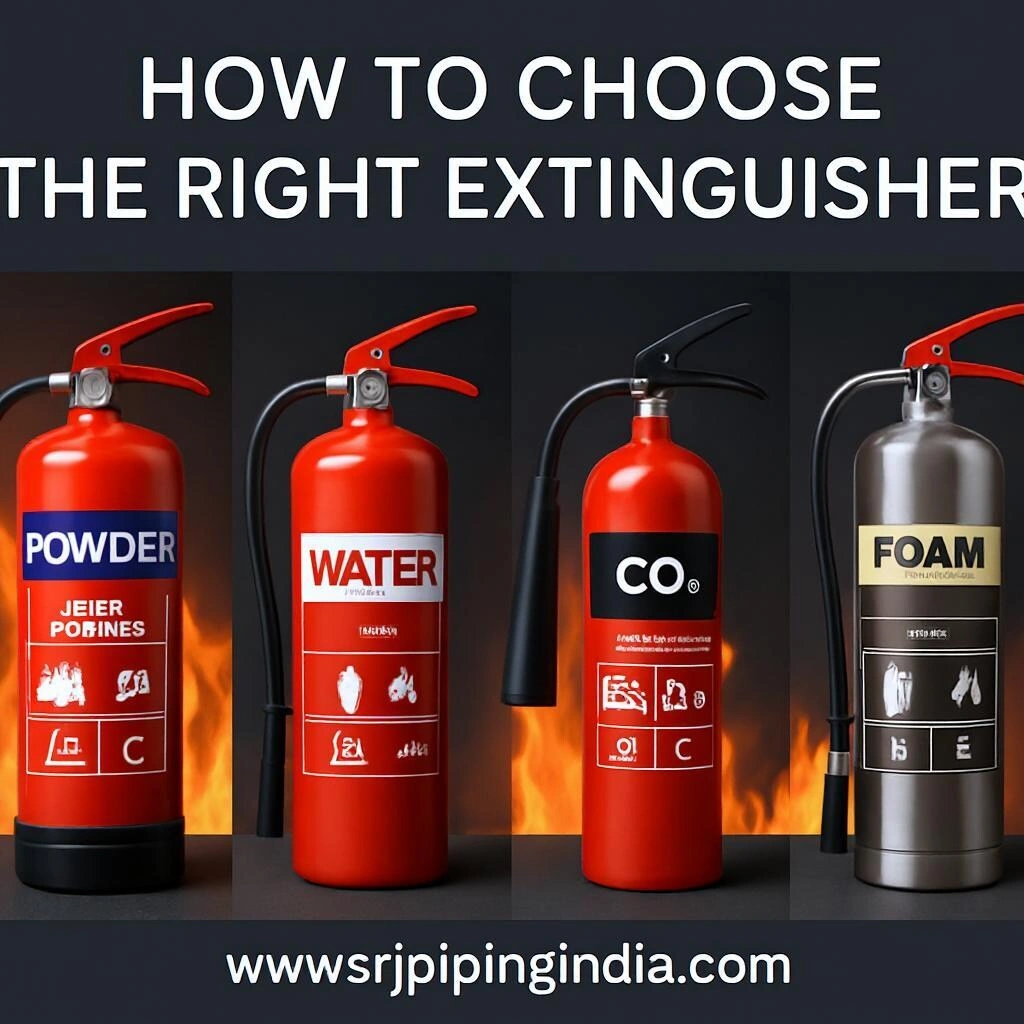
        Fire Extinguisher Color Coding

        Fire extinguishers often use color-coded labels or bodies to quickly identify their contents and suitable fire types:

        Water (Red)
        Wet Chemical (Yellow)
        Dry Powder (Blue)
        Foam (White)
        CO₂ (Black)

        Note that color coding systems may vary by region. Always read the label for specific instructions and classifications.

        How to Choose the Right Extinguisher

        Selecting the appropriate fire extinguisher depends on several factors:

        Choosing Fire Extinguisher

        Factors to consider when selecting fire extinguishers

        1. Fire risk assessment: Identify potential fire hazards in your facility
        2. Size and layout: Ensure adequate coverage for all areas
        3. User capability: Consider who will be operating the extinguishers
        4. Environmental factors: Temperature extremes or special hazards
        5. Compliance requirements: Meet local regulations and insurance standards

        Our experts at SRJ Piping India can conduct a comprehensive fire protection system assessment to recommend the ideal extinguisher types and placements for your specific needs.

        The PASS Method of Operation

        Using a fire extinguisher correctly requires following the PASS technique:

        P

        Pull the pin

        Break the tamper seal and pull the pin to unlock the operating lever

        A

        Aim low

        Point the nozzle or hose at the base of the fire

        S

        Squeeze the lever

        This releases the extinguishing agent

        S

        Sweep side to side

        Move carefully across the fire until it's out

        Important Safety Tips

        • Always have an escape route at your back
        • Never turn your back on a fire, even if it appears to be out
        • If the fire grows or doesn't extinguish quickly, evacuate immediately
        • Only attempt to fight small, contained fires

        Proper Placement and Accessibility

        Effective fire extinguisher placement is critical for quick response:

        • Visibility: Mount in conspicuous locations with clear markings
        • Accessibility: No more than 5 feet above the floor
        • Proximity: Within 75 feet of any point in commercial buildings
        • Hazard areas: Near specific hazards like kitchens or electrical panels
        • Pathways: Along normal paths of travel and exits

        Our industrial piping experts can help design optimal fire protection system layouts for complex facilities.

        Fire Extinguisher Maintenance

        Regular maintenance ensures extinguishers will function when needed:

        Maintenance Activity Frequency Description
        Visual Inspection Monthly Check for proper pressure, visible damage, and accessibility
        Professional Inspection Annually Certified technician checks internal and external condition
        Hydrostatic Testing Every 5-12 years Pressure test to verify cylinder integrity (varies by type)
        Recharging After use or when needed Refill extinguishing agent and repressurize

        SRJ Piping India offers comprehensive annual maintenance contracts to keep your fire protection systems in peak condition.

        Fire Extinguisher Maintenance

        Proper maintenance extends extinguisher lifespan and reliability

        Compliance Standards and Regulations

        Fire extinguishers must meet various national and international standards:

        • NFPA 10: Standard for Portable Fire Extinguishers
        • OSHA 29 CFR 1910.157: Portable Fire Extinguishers requirements
        • IS 2190: Indian Standard for selection and installation
        • EN 3: European standard for portable extinguishers
        • UL 711: Rating and fire testing of extinguishers

        Our fire protection systems are designed and installed to meet all relevant standards, ensuring compliance and optimal safety.

        Frequently Asked Questions

        How often should fire extinguishers be replaced?

        Fire extinguishers don't have a specific expiration date but typically last 10-12 years with proper maintenance. They should be replaced when they can no longer be properly serviced or fail hydrostatic testing.

        Can I use any fire extinguisher on an electrical fire?

        Only Class C or multipurpose (ABC) extinguishers should be used on electrical fires. Water-based extinguishers can conduct electricity and create shock hazards.

        How far will a typical fire extinguisher spray?

        Most portable extinguishers have a range of 6-20 feet, depending on size and type. Always check the manufacturer's specifications for your specific model.

        What's the difference between dry chemical and CO₂ extinguishers?

        Dry chemical extinguishers leave a residue but are effective on multiple fire types. CO₂ extinguishers leave no residue but are only effective on Class B and C fires and can be dangerous in confined spaces.

        How many fire extinguishers does my business need?

        The number depends on your facility's size, layout, and fire hazards. NFPA 10 recommends extinguishers be no more than 75 feet apart in commercial buildings. Our fire protection experts can conduct a thorough assessment.

        Professional Fire Protection Services

        SRJ Piping India offers comprehensive fire protection solutions:

        • Fire extinguisher supply and installation
        • Annual maintenance and inspection contracts
        • Fire risk assessments and system design
        • Employee fire safety training
        • Compliance audits and certification support

        With our expertise in industrial systems and structural fabrication, we deliver integrated fire protection solutions for complex facilities.

        Ready to Enhance Your Fire Safety?

        Contact SRJ Piping India today for a free consultation on your fire protection needs.

        Get a Free Assessment

        Or call us at: +91 80416 63637 / +91 98805 91727

        Want To Buy Fire Protection Systems for Your Factory? Read This

        Want To Buy Fire Protection Systems for Your Factory? Read This | SRJ Piping India

        Want To Buy Fire Protection Systems for Your Factory? Read This

        Your comprehensive guide to selecting, installing, and maintaining the right fire protection system for your industrial facility

        Factory Fire Protection System

        Modern fire protection systems are essential for industrial safety

        Key Takeaways

        • Industrial fire protection systems reduce risk by up to 85% when properly installed
        • NFPA and IS standards mandate specific requirements for different industries
        • Combination systems (water + chemical) provide the most comprehensive protection
        • Professional maintenance can extend system lifespan by 10-15 years
        • Early detection systems can reduce fire damage costs by 60-70%

        Why Factory Fire Protection is Non-Negotiable

        Industrial facilities face unique fire risks due to the presence of flammable materials, electrical equipment, and often complex layouts. According to the National Crime Records Bureau, India reported over 10,000 factory fires in the last five years, resulting in significant economic losses and, tragically, loss of life.

        A properly designed fire protection system serves three critical functions:

        1. Life Safety: Protects your most valuable asset - your employees
        2. Asset Protection: Minimizes damage to buildings, equipment, and inventory
        3. Business Continuity: Reduces downtime and helps operations resume quickly
        Fire Protection Importance

        Proper fire protection saves lives and protects investments

        At SRJ Piping India, we've seen firsthand how the right fire protection system can mean the difference between a minor incident and a catastrophic loss. Our fire protection solutions are designed specifically for Indian industrial environments.

        Types of Industrial Fire Protection Systems

        Choosing the right type of system depends on your factory's specific hazards, size, and processes. Here are the main categories:

        1. Water-Based Systems

        • Sprinkler systems (wet, dry, pre-action, deluge)
        • Water spray systems
        • Water mist systems

        Best for: General manufacturing, warehouses, facilities with Class A (ordinary combustibles) hazards

        2. Chemical Suppression Systems

        • Clean agent systems (FM-200, Novec 1230)
        • CO2 systems
        • Foam systems

        Best for: Data centers, electrical rooms, flammable liquid storage (Class B hazards)

        3. Special Hazard Systems

        • Explosion suppression systems
        • Industrial kitchen hood systems
        • Flammable vapor detection

        Best for: Chemical plants, refineries, food processing facilities with unique risks

        Many facilities benefit from a combination approach. For example, our MEP systems often integrate multiple fire protection technologies for comprehensive coverage.

        How to Select the Right System for Your Factory

        Selecting a fire protection system requires careful evaluation of several factors:

        1. Hazard Assessment

        Identify all potential fire hazards in your facility:

        • Flammable materials stored or used
        • Electrical equipment
        • Hot work areas
        • Special processes

        2. Building Characteristics

        • Size and layout
        • Construction materials
        • Ventilation
        • Occupancy patterns

        3. Regulatory Requirements

        Your system must comply with:

        • National Building Code of India
        • Factory Act requirements
        • Industry-specific standards
        • Local fire department regulations

        4. Business Priorities

        • Budget constraints
        • Downtime tolerance
        • Future expansion plans

        Our consultation process helps clients navigate these complex decisions to find the optimal solution.

        Key Components of an Effective System

        A complete industrial fire protection system typically includes:

        Fire System Components

        Modern systems integrate multiple components for complete protection

        1. Detection System: Smoke, heat, and flame detectors
        2. Alarm System: Audible and visual alerts
        3. Suppression System: Sprinklers, chemical agents, or foam
        4. Control Panel: System brain that monitors and activates components
        5. Water Supply: Tanks, pumps, and piping for water-based systems
        6. Emergency Lighting: Exit path illumination
        7. Manual Controls: Pull stations and extinguishers

        For facilities requiring complex industrial piping, we design integrated solutions that meet both fire protection and process needs.

        Compliance with Fire Safety Standards

        Indian factories must comply with several key standards:

        Standard Scope Applicability
        IS 3844 Code of practice for installation and maintenance of automatic fire alarm systems All factories
        IS 2189 Automatic sprinkler systems Factories with high fire load
        NFPA 13 Standard for installation of sprinkler systems Multinational companies
        IS 15301 Fire safety in chemical industries Chemical plants

        Our certifications and accreditations ensure all installations meet or exceed these requirements.

        Professional Installation Process

        A proper installation follows these key steps:

        1. Design and Engineering

        • Hazard analysis
        • Hydraulic calculations
        • System layout

        2. Material Procurement

        • Approved components
        • Quality assurance checks
        • Custom fabrication if needed

        3. Installation

        • Piping and equipment installation
        • Electrical connections
        • Integration with other systems

        4. Testing and Commissioning

        • Hydrostatic tests
        • Functional tests
        • Final approval

        Our fabrication expertise allows us to create custom solutions for challenging installations.

        Ongoing Maintenance Requirements

        Regular maintenance is crucial for system reliability. Key activities include:

        Weekly/Monthly Checks

        • Visual inspection of components
        • Alarm testing
        • Pressure gauge monitoring

        Quarterly Tests

        • Water flow tests
        • Control valve operation
        • Backflow preventer checks

        Annual Maintenance

        • Full system inspection
        • Sprinkler head checks
        • Pump performance tests

        Our annual maintenance program ensures your system remains in peak condition year after year.

        Cost Considerations and ROI

        While fire protection systems require investment, they provide substantial returns:

        Fire Protection ROI

        Proper fire protection pays for itself many times over

        Cost Factors

        • System type and size
        • Building complexity
        • Local water supply conditions
        • Special hazard requirements

        Financial Benefits

        • Insurance premium reductions (typically 15-25%)
        • Tax benefits under Section 35AD
        • Reduced business interruption costs
        • Asset protection

        We offer customized solutions to fit various budget requirements without compromising safety.

        Success Stories from Indian Factories

        Automotive Components Manufacturer

        Challenge: Needed protection for paint shop with flammable vapors

        Solution: Foam deluge system with specialized detection

        Result: Contained minor fire with zero spread or downtime

        Textile Mill

        Challenge: High-piled combustible storage in warehouse

        Solution: ESFR sprinkler system with early suppression capability

        Result: 40% lower insurance premiums and peace of mind

        Food Processing Plant

        Challenge: Needed protection for electrical panels and cooking areas

        Solution: Combination of clean agent and wet chemical systems

        Result: Passed international audit with zero findings

        View more of our projects and client successes.

        Expert Answers to Common Questions

        Q: How often should fire protection systems be tested?

        A: Basic tests should be weekly/monthly, with comprehensive annual testing. NFPA 25 specifies exact requirements based on system type.

        Q: Can we install a system without disrupting operations?

        A: Yes, we specialize in phased installations that minimize operational impact.

        Q: What's the typical lifespan of a fire protection system?

        A: Properly maintained systems last 20-30 years, though components like detectors may need earlier replacement.

        Q: How do we choose between different sprinkler types?

        A: The decision depends on your hazard classification, ambient temperatures, and water supply. Our engineers can assess your specific needs.

        Ready to Protect Your Factory?

        Don't wait for an incident to discover your fire protection isn't adequate. Our experts will assess your facility and recommend the optimal solution.

        Call Now: +91-80416-63637

        Or contact us online for a free consultation

        5 Reasons Its High Time You Have Your Fire Protection System Inspected

        5 Reasons It's High Time You Have Your Fire Protection System Inspected   

        Table of Contents

        If you’ve been watching the news, you must be aware of the numerous fire incidents that routinely take place in different parts of the country. Last year alone, India was devastated by three fatal fires that broke out in a Mumbai hotel, a temple in Madurai, and a factory in Delhi. Not just that, these incidents were earmarked as the deadliest ones as they resulted in mass casualties and caused irreparable damage to property. Y

        et, investigations revealed that the incendiary events were just waiting to happen. If you need further proof that fire accidents in India are largely unabated, here’s a report published by FICCI-Pinkerton that will be sure to convince you. This risk survey carried out in 2017 designates fire as the 4th highest natural risk that plagues Indian factories and businesses.

        Although awareness around fire prevention and safety has increased in recent times, there are several fallacies out there that need to be immediately debunked. One such popular myth concerning fire safety is that installing a fire protection system is the final step to everlasting protection. That is what one might call total FAKE NEWS!

        Any safety expert will tell you that fire protection systems will inevitably age and turn defective. It is up to us to regularly inspect and maintain them.

        Top 5 Reasons to Check up on your Fire Protection System

        In this spirit, here are the top 5 reasons to check up on your fire protection system ASAP.
        1. Respect the Law

          If you’re reluctant to have your fire protection system inspected, do it simply because it’s the law. You would probably agree that the last thing any factory-owner or building proprietor needs is to get in trouble with the authorities. For no other reason than it could be extremely bad for business. Most local agencies and government bodies have stringent requirements that mandate a frequent inspection of all the firefighting equipment on the premises. By carrying out these rigorous checks, you can rest easy knowing that your business is in full compliance with the law.

        2. Have your Employees’ Back

          Aside from obeying building codes and standards, a great reason to have your fire protection systems inspected is that it helps save lives. Literally! Factory floors and high-rise offices are usually teeming with people who are going about their work. Apart from the usual occupants, there might be a significant number of individuals who are simply in the building for an appointment. When summed up, the total figure is high. As the manager or boss, it is your responsibility to ensure all of their safety. While installing a fire protection system is a great step in that direction, guaranteeing that the devices are fully-functional all the time is key.

        3. Money Saved is Money Earned

          Worried about racking up unaffordable inspection charges? Well, let us tell you right now that taking your fire protection system for granted will end up costing you a lot more. When a fire erupts at a commercial space, property damage and business downtime are not the only consequences. Your company might be opening itself up to enormous lawsuits filed on behalf of injured employees or customers. You could actually end up saving money by maintaining your fire protection system as it would decrease your insurance premiums.

        4. No More False Alarms

          You could purchase the highest-priced, state-of-the-art fire protection system on the market and it would still be vulnerable to some malfunction. Defectiveness among fire protection systems is fairly common as they are made up of several delicate electrical parts. This is primarily why false alarms are also a regular event, especially when a fire protection system hasn’t been inspected recently. The only certified solution is to carry out regular testing of fire protection devices such as smoke alarms and heat detectors. False alarms are a nuisance to workplaces as they result in a wastage of time and money. It is also likely that your firm will be slapped with a hefty fine by the Fire Department in such cases.

        5. Prevention is the cure

          Finally, the last reason why you should have your fire protection system inspected is to protect your investment. Obviously fire protection systems don’t come cheap. Their prices are increasing every day and you don’t want to splurge on a new one just yet. Your fire protection system can last beyond its shelf life as long as you commit to a strict schedule of inspections. 

        If you’re in doubt about how to inspect fire safety systems, just pick up the phone and call in a pro like SRJ Piping India. We have a great team of experienced engineers who will take it from there. 


        For more information, contact us now!

        Is your fire protection system overdue for an inspection? Neglecting regular checks can have dire consequences—from failed compliance audits to catastrophic fire incidents. According to the NFPA’s Fire Inspection Manual82% of fire system failures result from poor maintenance—a risk easily mitigated with proactive care. At SRJ Piping India, our Comprehensive Fire System Inspection service identifies hidden issues like corroded pipes or faulty alarms before they escalate. Don’t wait for a crisis: OSHA’s Emergency Preparedness Guidelines mandate regular inspections, a process we simplify in our Fire Safety Maintenance Checklist. Protect your assets and workforce—schedule your inspection today.

        Due for a Fire System Inspection?

        SRJ Piping India offers expert inspections to keep your fire protection systems compliant, functional, and ready for emergencies.

        How To Prepare A Simple Fire Protection Plan For Your Business?

        How To Prepare a Simple Fire Protection Plan For Your Business?

        Heavy duty fabrication

        For any business, big or small, a robust fire protection plan isn’t just a regulatory requirement—it’s a critical investment in the safety of your employees, the security of your assets, and the continuity of your operations. While installing state-of-the-art fire protection systems is a crucial first step, their effectiveness hinges entirely on a well-thought-out and frequently practiced plan. Without clear procedures, even the best equipment can fail to perform effectively in an emergency.

        The responsibility for safeguarding employees and property from the devastating impact of fire rests squarely on the shoulders of the employer or property owner. A simple yet comprehensive fire protection plan serves as your blueprint for action, minimizing risks and ensuring a swift, organized response should a fire occur.

        The Three Pillars: Primary Goals of Any Fire Protection Plan

        Every effective fire protection plan is built upon three fundamental goals:

        • Controlling Fire Hazards: This involves identifying potential sources of ignition and flammable materials within your premises and implementing measures to eliminate or mitigate them. Common hazards include faulty electrical wiring, improper storage of combustibles, overloaded circuits, flammable liquids, and equipment that generates heat. Control measures range from routine electrical inspections and proper waste disposal to maintaining clear pathways and ensuring machinery is correctly installed and maintained.
        • Maintaining Fire Protection Systems: This pillar focuses on ensuring that all your fire safety equipment—such as fire extinguishers, smoke detectors, fire alarms, sprinkler systems, and emergency lighting—is fully functional and ready for immediate use. Regular inspections, testing, and professional servicing are non-negotiable to guarantee optimal performance when it matters most.
        • Evacuating Building Occupants Safely: In the event of a fire, the primary concern is the safe and efficient evacuation of everyone within the building. This requires a clear and well-rehearsed evacuation plan that guides occupants to safety with minimal confusion and delay.

        Essential Practices for a Comprehensive Fire Protection Plan

        Developing your plan requires meticulous attention to detail and a proactive approach. Here are the essential practices to incorporate:

        Consult Local Fire Department Officials

        Your local fire department is an invaluable resource. Before finalizing your plan, schedule a consultation with them. They can:

        • Provide Local Code Compliance: Advise you on specific local fire safety codes, ordinances, and regulations that apply to your business type and building structure in Bangalore.
        • Offer Expert Insights: Help identify potential hazards unique to your premises and offer practical solutions based on their extensive experience.
        • Pre-Incident Planning: Familiarize themselves with your building layout, potential hazards, and evacuation routes, which can be critical for their response in an actual emergency. This consultation ensures your plan is not only practical but also compliant and aligned with local emergency services.

        Create a Detailed, Clear Evacuation Plan

        A robust evacuation plan is the backbone of your fire protection strategy. It must be more than just a vague idea; it needs to be detailed and easily understood by everyone.

        • Marked Exit Routes: Ensure all exit routes are unobstructed, well-lit, and marked with appropriate signage.
        • Primary and Secondary Routes: Designate at least two clear escape routes from every area of your building to provide alternatives if one path is blocked.
        • Designated Assembly Points: Establish safe and easily identifiable outdoor assembly points located at a safe distance from the building. Ensure these points are communicated to all occupants.
        • Considerations for Occupants with Disabilities: Develop specific procedures to assist individuals with mobility impairments or other disabilities during an evacuation.
        • Maps and Signage: Post clear, easy-to-read evacuation maps on every floor, especially near exits and common areas.

        Raise Fire Safety Awareness Among Workers

        An informed workforce is your first line of defense. Fire safety awareness should be an ongoing effort, not a one-time lecture.

        • Regular Briefings and Reminders: Incorporate fire safety tips into regular team meetings or internal communications.
        • Understanding Hazard Locations: Ensure employees are aware of the locations of fire hazards and know how to report them.
        • Location of Equipment: Everyone must know the location of fire extinguishers, alarm pull stations, and first aid kits.
        • Personal Responsibility: Foster a culture where every employee feels responsible for maintaining a safe environment and reporting potential risks.

        Conduct Comprehensive Training for Officials and Employees

        Theoretical knowledge is insufficient; practical training is crucial.

        • Basic Fire Extinguisher Usage: Provide hands-on training using the “P.A.S.S.” method (Pull, Aim, Squeeze, Sweep). This empowers employees to tackle small fires before they escalate.
        • First Aid and CPR: Train designated personnel in basic first aid and CPR to handle potential injuries during an emergency.
        • Evacuation Drills and Roles: Conduct regular, unannounced fire drills to practice evacuation procedures. Assign specific roles to employees, such as fire wardens, sweepers (to ensure areas are clear), and assistants for those needing help.
        • Reporting Procedures: Train employees on how to properly report a fire, including the use of emergency services numbers and internal reporting protocols.

        Install and Maintain Emergency Lights and Exit Signs

        In the event of a power failure during a fire, these systems become lifelines.

        • Strategic Placement: Ensure emergency lights and exit signs are strategically placed along all escape routes to clearly guide occupants, even in smoke-filled conditions.
        • Regular Testing: Emergency lights and signs must be tested monthly to ensure batteries are charged and lights illuminate correctly. Annual complete discharge tests are also necessary to verify battery duration.
        • Proper Illumination: Ensure that exit signs are always illuminated and visible, in compliance with local code requirements.

        Establish a Fire Emergency Task Force or Wardens

        A dedicated team ensures that coordinated action is taken during an emergency.

        • Designated Roles and Responsibilities: Appoint and train a team of fire wardens or an emergency task force. Their roles might include overseeing evacuations, checking designated areas, assisting people with disabilities, and liaising with emergency services.
        • Clear Communication Channels: Establish clear communication protocols for the task force to communicate effectively with one another and with emergency responders.
        • Regular Refresher Training: Ensure this team receives advanced, regular training in fire safety, evacuation management, and emergency procedures.

        Conduct Routine Inspections and Maintenance of Fire Safety Devices

        This is the ongoing vigilance that keeps your plan effective.

        • Fire Extinguishers: Conduct monthly visual checks (including pressure gauge, tamper-evident seals, and general condition) and annual professional inspections, maintenance, and recharging as required by standards such as NFPA 10.
        • Fire Alarms and Smoke Detectors: Test fire alarm systems regularly (e.g., weekly or monthly) and ensure smoke detectors are tested periodically, with batteries replaced as needed. Professional annual inspections are crucial.
        • Sprinkler Systems: If installed, these systems require regular professional inspections and testing (e.g., quarterly or annually) to ensure proper water pressure, clear heads, and operational valves.
        • Emergency Contact Information: Keep a current list of all emergency contacts (fire department, police, medical services, key personnel) readily accessible.

        Conduct Regular Drills and Review the Plan Annually

        A plan is only as good as its practice and its currency.

        • Unannounced Drills: Conduct fire drills at least once or twice a year, and ideally, make some of them unannounced to test the actual readiness of your team. Evaluate the drill’s effectiveness and identify areas for improvement.
        • Post-Drill Debriefing: After each drill, gather feedback from employees and the task force to identify areas for improvement and refine procedures.
        • Annual Review and Update: Your business, building, and regulations may change. Review and update your fire protection plan annually, or whenever there are significant changes to your premises, operations, or staff.

        Your Partner in Fire Safety: SRJ Piping India

        Developing and maintaining a robust fire protection plan might seem daunting, but you don’t have to do it alone. For expert assistance in Bangalore, consider consulting with professionals.

        SRJ Piping India specializes in comprehensive fire protection solutions, from installing and maintaining fire extinguishers and alarm systems to advising on the development of practical fire safety plans tailored to your specific business needs. Their expertise ensures that your fire protection plan is not only compliant with all regulations but also truly effective in safeguarding your business.

        By taking these steps, you empower your business to effectively control fire hazards, maintain critical safety systems, and ensure the safety of everyone within your premises, thereby fostering a secure environment that supports success.

        Creating a simple fire protection plan for your business begins with understanding core risks and compliance requirements. Start by consulting the NFPA’s Small Business Fire Safety Checklist to identify vulnerabilities in your workspace layout and equipment. At SRJ Piping India, we emphasize integrating these standards with practical solutions like our Custom Fire Protection Systems, which are tailored to Bangalore’s unique infrastructure challenges. Don’t overlook staff training—OSHA’s Fire Prevention Plan Guidelines stress its importance, a principle we expand on in our guide to Employee Fire Safety Training. By combining regulatory wisdom with localized expertise, your plan will be both compliant and crisis-ready.