Compressed Air Piping vs. Traditional Pneumatic Systems: Which One Is More Efficient? | SRJ Piping India
Compressed Air Piping vs. Traditional Pneumatic Systems: Which One Is More Efficient?
Comparing performance, cost, and energy efficiency to help you choose the right system for your industrial needs
Industrial facilities rely heavily on pneumatic systems for automation, tool operation, and material handling. The choice between compressed air piping and traditional pneumatic systems significantly impacts energy efficiency, maintenance costs, and operational reliability. At SRJ Piping India, we've installed both systems across various industries and can help you determine the best solution for your facility.
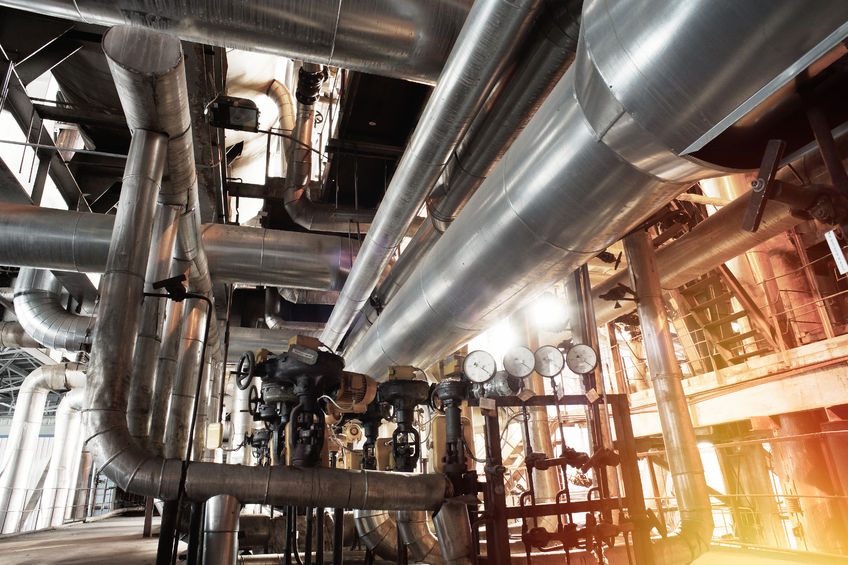
Modern compressed air piping systems offer significant efficiency advantages
Head-to-Head Comparison
Compressed Air Piping
Engineered piping systems designed specifically for high-efficiency air distribution with minimal pressure drops.
Advantages:
Up to 30% more energy efficient
Lower pressure drops (1-2 psi vs. 5-10 psi)
Reduced leakage (typically <5%)
Modular design for easy expansion
Longer lifespan (20+ years)
Limitations:
Higher initial investment
Requires professional installation
Less flexible for frequent layout changes
Best for: Large facilities, high-demand applications, energy-conscious operations.
Traditional Pneumatic Systems
Conventional systems using standard piping materials like galvanized steel or copper with push-to-connect fittings.
Advantages:
Lower upfront cost
Easier to install and modify
Wider availability of components
Familiar technology for maintenance teams
Limitations:
Higher energy consumption
Greater pressure losses
More frequent leaks (10-30% loss common)
Shorter service life (10-15 years)
Best for: Small facilities, temporary installations, low-budget projects.
Efficiency Comparison
Factor
Compressed Air Piping
Traditional Pneumatic
Energy Efficiency
85-95%
60-75%
Pressure Drop (per 100 ft)
1-2 psi
5-10 psi
Typical Air Leakage
<5%
10-30%
Installation Cost
$$$ (Higher initial)
$ (Lower initial)
Lifespan
20+ years
10-15 years
Maintenance Frequency
Low
Moderate to High
ROI Period
2-4 years
N/A
Key Insight: While compressed air piping has higher upfront costs, the energy savings typically provide a full return on investment within 3 years in most industrial applications.
Ideal Application Scenarios
Large Manufacturing Plants
Recommended: Compressed air piping
Why: The energy savings at scale justify the initial investment, and the reduced downtime pays dividends in production continuity.
Small Workshops
Recommended: Traditional pneumatic
Why: Lower air demands make the efficiency gains less significant, while budget constraints favor simpler systems.
Automotive Assembly
Recommended: Hybrid approach
Why: Compressed air mains with traditional drops to workstations balances efficiency with flexibility.
Cost Analysis Over 10 Years
For a Typical 50,000 sq. ft. Facility:
Compressed Air Piping:
Installation: ₹25 lakh
Energy Costs: ₹8 lakh/year
Maintenance: ₹1 lakh/year
Total 10-year Cost: ₹1.15 crore
Traditional Pneumatic:
Installation: ₹15 lakh
Energy Costs: ₹12 lakh/year
Maintenance: ₹2.5 lakh/year
Total 10-year Cost: ₹1.6 crore
Conclusion: The compressed air system saves ₹45 lakh over 10 years despite higher initial costs.
Hybrid Approach: Best of Both Worlds
Many facilities achieve optimal results by combining both technologies:
Compressed air piping for main distribution lines
Traditional pneumatics for final drops to workstations
Smart pressure regulators to optimize each zone
Leak detection systems throughout
This approach typically delivers 80% of the energy savings of full compressed air piping at 60% of the cost. Our engineers can help design the right hybrid solution for your facility.
Need Help Choosing the Right System?
Our pneumatic system experts can assess your facility and recommend the most efficient solution for your specific needs and budget.
Steam piping failures cause an estimated ₹2.8 billion in damages annually in Indian industries
Proper material selection can reduce failure rates by up to 60%
Predictive maintenance technologies can detect 85% of potential failures before they occur
ASME B31.1 compliance reduces accident likelihood by 90% compared to non-compliant systems
Comprehensive operator training programs decrease human error-related incidents by 75%
The Alarming Reality of Steam Piping Failures
Industrial steam systems operate under extreme conditions, with temperatures exceeding 500°F (260°C) and pressures often surpassing 150 psi (10 bar). When failures occur, the results can be catastrophic:
Explosive energy release: 1 cubic meter of steam at 100 psi contains equivalent energy to 1kg of TNT
Thermal hazards: Steam at 150 psi can cause third-degree burns in less than 1 second of exposure
Economic impact: The average cost of a major steam system failure exceeds ₹50 lakh in direct damages
Visual examination for leaks, corrosion, insulation damage
Steam trap functionality tests
Support integrity checks
Expansion joint condition
Annual Maintenance Requirements
Ultrasonic thickness testing at critical locations
Full system pressure test (1.5x operating pressure)
Safety valve calibration
Thermal imaging survey
Expert Q&A: Steam System Safety
How often should steam piping be replaced?
With proper maintenance, carbon steel steam piping typically lasts 15-25 years. However, critical sections (elbows, reducers) may need replacement every 8-12 years due to higher erosion rates.
What's the most overlooked steam system hazard?
Water hammer is frequently underestimated. A 2018 ASME study found it accounts for 22% of sudden steam system failures.
Can IoT solutions prevent steam accidents?
Absolutely. Our smart monitoring systems can detect 92% of developing issues before they become critical, reducing unplanned downtime by 65%.
Top Fire Protection Companies in India: Leaders in Fire Safety Solutions
Table of Contents
In India, fire safety is a critical aspect of both residential and industrial operations. As fire hazards can lead to significant loss of property and life, having robust fire protection systems in place is essential. Across the country, several companies provide top-tier fire safety solutions, ensuring the safety of facilities and compliance with regulations. This article highlights some of the leading fire protection companies in India, including SRJ Piping India, a renowned name in the industry.
1. SRJ Piping India: Innovators in Fire Protection Systems
At the forefront of fire safety,SRJ Piping India offers a wide range of fire protection solutions, from designing fire suppression systems to providing reliable fire extinguishers and alarms. With decades of expertise, SRJ Piping India ensures that all installations meet national and international safety standards, helping industries and businesses protect their assets and people. Ourfire protection systems are designed with modern technology and backed by annual maintenance services to ensure reliability.
2. FirePro Systems
FirePro Systems is another leading fire protection company in India, providing comprehensive fire safety and security solutions. They specialize in fire detection, alarms, and suppression systems for various sectors, including healthcare, IT, and manufacturing. FirePro has been known for its innovative approach and excellent customer service, delivering tailor-made solutions to meet specific industry requirements. Their systems are designed to minimize downtime and ensure seamless operation during emergencies.
3. Safex Fire Services
Safex Fire Services has been a trusted name in the fire safety industry for over three decades. They manufacture high-quality fire extinguishers, hydrants, and fire alarm systems that comply with strict safety standards. Their product range includes specialized fire suppression systems designed for industrial and commercial use, making them a top choice for large-scale fire protection projects.
4. NewAge Fire Fighting Co. Ltd
NewAge Fire Fighting is a well-known player in the fire protection space, offering fire hoses, couplings, nozzles, and monitors. They provide custom fire fighting solutions that are widely used in the oil and gas, chemical, and manufacturing industries. Their reputation for durable and reliable fire protection equipment has earned them a significant market share in India and abroad.
5. Honeywell Fire Safety India
Honeywell is a global leader in fire protection and safety solutions, with a strong presence in India. Their products range from smoke detectors to integrated fire alarm systems, making them a go-to provider for cutting-edge fire safety solutions. Honeywell’s commitment to innovation and safety has made them a key player in the Indian market, delivering high-performance systems that enhance the safety of industrial and commercial facilities.
Why Choose SRJ Piping India for Your Fire Protection Needs?
With so many options available, SRJ Piping India stands out as a trusted name in the industry. Our team ensures that each project meets the highest safety standards, from installation to ongoing maintenance. Whether you’re in need of heavy structural fabrication for industrial fire systems or comprehensive fire protection solutions, we offer the expertise and equipment required to keep your operations safe.
Additionally, we integrate fire protection systems with other critical infrastructures, such as water treatment plants, ensuring reliable water supply for fire suppression. By choosing SRJ Piping India, you gain access to innovative solutions that are not only compliant with fire safety standards but also tailored to meet the specific needs of your facility.
Final Thoughts
Fire safety is an essential part of any industrial or commercial setup, and having a reliable fire protection system in place can make all the difference during emergencies. Companies like SRJ Piping India are at the forefront of deliveringcomprehensive fire protection systems that ensure long-term safety and compliance. By partnering with the best fire protection companies in India, you can safeguard your assets, operations, and most importantly, lives.
At SRJ Piping India, we are committed to providing top-notch fire protection systems that meet industry standards. If you’re looking for advanced fire safety solutions, check out our Fire Protection Systems page to learn more about how we design and implement high-quality safety systems.
For businesses requiring routine maintenance and inspections, our Annual Maintenance for Fire Extinguishers service ensures that your fire safety equipment remains in optimal condition.
We take pride in working with top clients and executing major fire protection projects. Explore our Projects & Clientele page to see some of our successful implementations across various industries.
Curious about how we work? Visit our How We Work page to understand our step-by-step process for delivering fire safety excellence.
For inquiries, consultations, or expert guidance on fire protection solutions, feel free to Contact Us today. Our team is ready to help you safeguard your business with reliable fire safety measures.
Fire Safety Regulations & Guidelines
Staying compliant with national and international fire safety regulations is crucial. Here are some essential resources:
Kanex Fire – A leading manufacturer of fire suppression systems and extinguishers.
Safex Fire Services Ltd. – Offering cutting-edge fire safety products and engineering solutions.
By leveraging the best industry resources and service providers, you can ensure maximum fire safety compliance and state-of-the-art fire protection systems for your business or property.
Choosing the right fire protection company is crucial for ensuring safety and compliance with industry standards. Leading firms, such as SRJ Piping India, provide cutting-edge fire suppression and prevention solutions for industrial and commercial spaces. Businesses also rely on regular fire safety maintenance to keep their fire protection systems functional. Global organizations like NFPA and Bureau of Indian Standards (BIS) continue to set benchmarks for fire safety regulations, ensuring that companies adhere to the highest safety standards.
Partner with a Leader in Fire Safety Solutions
SRJ Piping India is trusted across industries for delivering reliable, certified fire protection systems and services nationwide.
The Importance of Fire Protection Systems in Industrial Settings
Table of Contents
“Explore the critical role fire protection systems play in safeguarding industrial settings. Learn how these systems prevent fire hazards, protect assets, and ensure the safety of workers and infrastructure
Picture this: A spark in the industrial setting, and everything goes at risk. Fire spread can occur in a matter of seconds, reducing very valuable assets to ashes, and lives are put at risk.
This is why industrial fire protection is important.
Property damage worth billions, operation disturbances, and loss of human life, fires can cause all this; disaster-related scenarios have remained no stranger to mankind. However, fire safety systems shall foreclose the occurrence of such a disaster. Such systems allow for the detection and taming of fires in their infancy, causing negligible damage and ensuring the safety of workers and machinery.
These encapsulate alarms, sprinklers, and extinguishers, all of which work together to protect facilities. It is for this very reason that industrial facility managers, safety officers, and business owners have to understand and implement these systems to ensure proper protection.
A very good reason for investing in fire protection systems is that they not only protect assets but also ensure conformance to safety legislation and save persons while at the same time safeguarding the business.
Why Fire Protection is Important?
The industrial fire risks are enormous and have been viewed as life and property. Then, why is fire protection of such paramount importance in industries? First, consider the possible losses:
Human lives: The interest of your staff is paramount.
Property Damage: Instruments and infrastructures can be lowered to ashes.
Business Interruption: Production stops may cause huge economic losses.
Environmental Impact: Chemical releases or explosions can harm the surrounding area.
Industrial fires can lead to disastrous situations. For instance, in the United States, there were over 37,000 fires in industrial and manufacturing properties in 2019 alone, which caused $1.2 billion in property damage. Such fires may suspend operations, resulting in huge losses in monetary terms.
One example is the 2013 blaze at a Bangladeshi garment factory, which killed 112 people and caused millions of dollars in damages. Another is the 2019 fire at a chemical plant in Texas that inflicted $150 million in damages and forced the evacuation of thousands of residents.
That’s why fire prevention in industrial settings is essential. Effective fire protection systems can detect and control fires quickly, reducing the potential for damage and loss.
Types of Fire Protection Systems
Many fire protection systems represent a critical measure of security applied to an industrial scenario. Nevertheless, different systems correspond to various purposes and benefits; it is important to understand how these systems operate.
Sprinkler Systems
Sprinklers are complex devices installed to control or put out a fire in the automatic system. The sprinklers are wet when a fire occurs in a building. They are good at controlling the fire and making the case of spreading impossible. They are only capable of causing damage to the sensitive equipment by the water released.
Fire Alarms
These systems defeat heat/smoke and warn of danger with sirens and light signals. Aided realization would assist in early discovery and evacuation. The major advantage that is associated with the devices is that they give an instant warning, though they do not have direct control over the fire.
Fire Extinguishers
Portable equipment is used to extinguish small fires. There are many types, e.g., water, foam, CO2, and dry powder, used on various types of fires. They are fairly easy to use and provide an immediate response; however, they are effective only on small constrained fires.
Fire Suppression Systems
Gas-based systems release chemicals to quench the fire; suitable for areas that possess sensitive equipment like server rooms as they do not leave any residues but are costly to install and maintain in terms of clean room requirements.
All these fire protection equipment have associated advantages and limitations. Their integration ensures an all-rounded fire safety system for the best protection of people and property.
Regulations and Standards To Govern Fire Safety
Industrial safety regulations stipulate the installation and functionality of fire guarding measures. This field is overseen by key bodies, including the National Fire Protection Association (NFPA) and the Occupational Safety and Health Administration (OSHA).
National Fire Protection Association (NFPA)
NFPA has developed extensive standards regarding fire safety. Their codes address all fields concerning fire prevention and strategies, including the design of sprinkler systems to the overall scheming of emergency planning.
Occupational Safety and Health Administration (OSHA)
OSHA enforces industrial fire safety compliance, which includes fire safety rules and regulations. Worker protection is the key consideration, and fines can be quite high in the event of non-compliance.
International Building Code (IBC):
This code contains minimum standards for the foundation and construction of buildings. It includes fire protection regulations.
Understanding and imposing these standards provides a greater level of safety in the work environment and protects the business from potential risks.
Benefits of Implements of Fire Protection Systems
When you use vigorous fire protection systems in your industrial facility, there are several ways that you stand to gain. Some of them include the following:
Safety of Employees & Assets
A fire protection system keeps your people and property safe. By assisting in the detection and arrest of fires in time, the systems are also key players in the prevention of injuries and damages to useful equipment and inventory.
Reduced Insurance Cost
Industrial fire safety measures can reduce the costs of insurance. Insurance companies realize that most fire safety benefits are effective, so they can reduce the level of premiums paid by businesses that have effective and sustainable fire protection mechanisms. This saves a lot in terms of costs over time.
Enhanced Reputation and Trust with Clients and Partners
Installing industrial fire safety systems also serves to improve your reputation and build trust with clients and partners in business. People are reassured that stakeholder interests are protected where the company has regard for safety. This can lead to stronger business relationships or new opportunities.
Long-term Cost Savings through Prevention and Mitigation
Substantially, such devices protect from fire; hence, if fire is not initiated or its effects diminished, then very high costs are avoided. The investment in fire protection starts paying for itself since money is saved from going into potential financial disasters.
These benefits underline the need for benefits of fire safety in industrialfacilities due to the protection accorded to individuals, property, and the business facility or estate since the fire protection system would serve as the solid backbone of safety and a great foundation for a great deal of operation.
How to Implement Fire Protection Systems?
There are some main steps in implementing the most effective or efficient fire protection systems in your industrial facility. Let me go through how to implement fire protection:
Assessment
Start by making a reliable risk assessment of your facility to identify all potential fire hazards that exist in your facility so that you can pinpoint all high-risk areas. The explanation is that that is what you base your effective fire protection plan on.
Planning
Use your assessment to cook up a scheme fit for your company’s needs if a fire sparks and goes wild. Design this with the guidance of fire protection experts to ensure your plan covers all essential concerns.
Installation
Installation of the fire protection belongs to a critical phase. Ensure you take someone licensed for the installation work. Ensure the fire protection installation is following regulation requirements and industry codes.
Employee Training
Employees have proved to be the most immediate safety tools in the area of fire. Employees must be trained to use fire protection equipment and follow emergency procedures. Regular drills hone preparation and make an individual confident.
Maintenance
Fire safety maintenance is a continuous process. Regular scheduling of inspection and servicing will ensure that the systems remain in top condition. This step has often been overlooked but plays a very important role in the long-run efficacy of the same.
Effective fire protection not only offers a disaster-free workplace but also ensures that one is not found red-handed with the surety of mishaps in a safe working environment.
Successful Case studies on Industrial Fire Protection
Let us delve into some life examples of industrial fire protection to investigate whether good systems can spell the difference.
Chemical Plant in Texas
This plant had major problems due to highly flammable products. They installed some of the most advanced foam-based suppression systems. So what was the result? The next potential disaster was taken care of when a small fire was quickly contained, saving millions from possible loss.
Automotive Factory in Michigan
Involving complicated machinery, the industry was highly prone to industrial fires. They developed a complete sprinkler system with regular staff training. This reduced the incidents of fire break-outs by 50% in two years.
Data Center in California
This high-tech facility needed something that would not do any damage to the sensitive equipment. The highlighted gas-based suppression system shows off all kinds of innovations in fire protection systems. Upon the smallest electrical fire, the system turned on, which saved the data from losses and did not get any equipment hurt.
And that is how these examples demonstrate industrial fire prevention with the right systems and planning that should work at your facility. It is important to have solutions according to your requirements and risks.
Future Trends in Industrial Fire Protection
The industrial fire protection landscape is changing very fast. Below outlined are some exciting future trends in fire safety:
Smart Sensors
Advanced sensors can detect fire at an advanced level and pinpoint exactly where it might have started.
AI-Powered Systems
Artificial intelligence is changing fire protection technology. Such systems analyze data in real-time and make quicker than quick decisions to prevent or contain fires.
IoT Integration
IoT devices interconnect fire protection systems more and more, improving monitoring while reducing response times.
Eco-friendly Suppressants
The latest innovations in fire safety are the making of suppressants that are efficient but more eco-friendly. The suppressants leave less damage to the environment.
Virtual reality training
VR has of late found its use in training and practice rooms, for example, regarding fire safety. With a VR device, they don’t need to take potential risks in real life.
These fire safety innovations make industrial environments even safer than ever before. Keep up-to-date with this information and make sure your facility is a front-runner in fire protection.
Closure
The future industry for fire protection remains on innovations in advanced technologies such as automation and smart systems. Such advances are viewed as critical to further increasing the importance of fire protection systems by reducing response times and risks for many industrial environments. Automatic detection and suppression can mean a whole new type of fire safety, promising more effective protection for any facility and its working staff.
At SRJ Piping India, we specialize in providing comprehensive fire protection systems for industrial settings, ensuring compliance with safety regulations and minimizing fire risks. Our Fire Protection Systems are designed to safeguard industries against fire hazards with advanced detection and suppression technologies.
Regular Annual Maintenance for Fire Extinguishers is essential to ensure fire safety equipment remains functional and effective during emergencies. Our expert maintenance services guarantee that your fire extinguishers, hydrants, and alarms are always in optimal working condition.
We have successfully implemented fire protection solutions across industries, helping businesses stay compliant and safe. Explore our Projects & Clientele to see how we have delivered fire safety excellence in various industrial setups.
Understanding how fire protection systems work can help industries make informed decisions. Check out our How We Work page for insights into our process, from system design to installation and maintenance.
For expert consultation on industrial fire protection, feel free to Contact Us today and secure your workplace with cutting-edge fire safety solutions.
Fire Safety Guidelines & Compliance Standards
Ensuring fire safety in industrial settings requires compliance with national and international standards. Here are some essential resources:
Fire safety is crucial for business owners, facility managers, and safety officers, making fire prevention and emergency response top priorities. Recent advancements in fire safety technology have significantly improved our ability to save lives and protect property.
Modern fire safety systems now seamlessly integrate with building management systems, ensuring fire safety measures are implemented quickly and efficiently. In this article, we’ll explore the latest trends and technologies in fire safety engineering.
If you manage or own a building, staying informed about the latest fire prevention tools and strategies is essential. Let’s dive into some of the cutting-edge technologies that are enhancing fire safety.
Smarter Fire Alarms
New smoke detectors are very clever. They can:
Tell the difference between real fires and false alarms
Warn about fire risks before they happen
Call for help faster
These new alarms work with your building’s systems. They can shut down airflow and doors to stop fumes from a fire, thereby halting its spreading.
How do they work? These smart smoke alarms think with the help of microcomputers. They can distinguish between smoke caused by a fire and that caused by burned toast. That means fewer false alarms, and faster action when there is real danger.
Some alarms even use sound to check the air. They can hear fire before you see it. This gives you more time to get out safely.
Tougher Building Materials
New materials make buildings safer:
Special coatings that puff up when hot, protect the building
Concrete that can fix small cracks by itself
Glass that stays strong in high heat
These give people more time to get out if there’s a fire.
Let’s discuss these materials:
Special coatings can be considered magic paints. When encountering fire and heating up, they expand massively. Thereby, a thick layer is formed in return, protecting the main parts of the building from catching fire.
Self-healing concrete works with capsules inside it. When you start a crack, these capsules break open. They release a special glue that fills the crack. This stops fire from getting through small spaces.
The tough glass is made of many layers. Between the layers is a clear, strong material. When fire heats the glass, this material turns into a shield. It holds the glass together and keeps the fire out.
Watching for Fires All the Time
New fire alarm systems offer:
Round-the-clock checking
Quick alerts to your phone
Details about where the fire is and how it’s spreading
These systems never sleep. They keep an eye on your building day and night. If they spot trouble, they send a message right away. You’ll know about a fire as soon as it starts, even if you’re not there.
The alerts tell you exactly where the problem is. Is it in the kitchen? The storage room? You’ll know right away. This helps you make quick choices about what to do next.
Training with Virtual Reality
The virtual games nowadays are used by fire safety experts to:
Simulate fires for training
Test escape plans safely
Help people to make better choices during emergencies
This helps a person to get ready for the real thing.
In other words, virtual reality is very near to a video game. It allows people to practice dealing with fires without any danger. They will learn how fires spread and how to react.
This training keeps people cool during actual fires. They have experienced it in the game before, so they know how to behave. It is a safe way to gain some experience.
Using Drones to Check Fires
Drones with flying cameras that have heat sensors can:
See how a fire is spreading
Locate hot spots within large buildings
Indicate firefighters’ safest way in
This is very helpful in fires involving tall buildings or those where there could be tricky situations.
These can safely fly around buildings in flames, returning pictures and heat maps. This shows firefighters where the fire is worst and where it might go next.
With drones, a whole big building can be checked in a hurry. They can spot dangers that people on the ground might miss, keeping firefighters safer and helping them snuff out fires faster
Smarter Sprinklers
New sprinkler systems use sensors to:
Turn on only where there’s fire
Change the volume of water they dispense depending on the fire
Reduce water damage where there’s no fire
These systems extinguish fires more effectively and with less damage.
Old sprinklers douse everything, even parts of the building that are not on fire. Well, this new system is much smarter. It only uses water where it’s needed.
They can even adjust how much water they are spraying. A small fire gets less water than a large one, so this means less damage to the water in your building and less stuff inside it.
Using Artificial Intelligence to Predict Fires
Smart computer programs can now:
Look at lots of info to guess where fires might start
Suggest ways to stop fires before they happen
Help fire departments plan better
This prevents many fires from occurring in the first place.
Maybe it seems that a certain area needs more fire exits. Or it might spot that some equipment is getting old and risky. By following these tips, you can stop many fires before they start.
Fire departments use this AI, too. It helps them know where to put fire stations and how many firefighters to have ready. In other words, this makes sure that help is going to get to you fast if you need it.
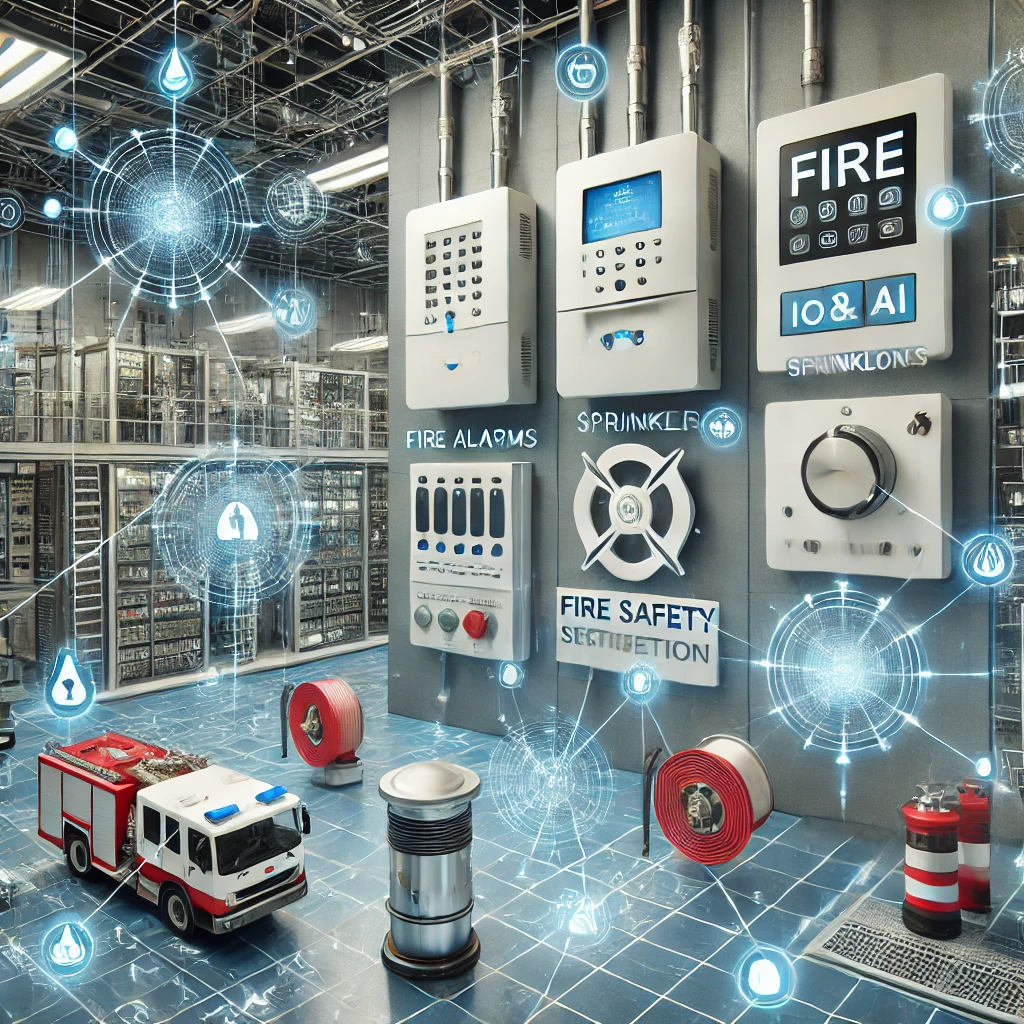
Fire safety engineering has seen remarkable advancements with the integration of AI-powered fire detection and smart IoT-based suppression systems. Modern solutions, like our advanced fire protection systems, enhance response times and minimize damage in critical situations. Additionally, industries are now prioritizing fire-resistant building materials to improve structural safety. Global standards such as NFPA fire safety guidelines and OSHA fire prevention regulations continue to shape innovative fire prevention strategies. These advancements collectively contribute to a safer, more resilient approach to fire safety in commercial and industrial space
Wrapping Up
These new tools for fire safety make your buildings safer than ever, though they will not replace basic fire safety. We will still need fire drills, clear escape ways, and well-kept safety gear.
If you’re in charge of a building, knowledge about such new tools is what makes the place safe. No matter what, the main goal is always safety for people and the protection of your buildings.
Want to know more? Think about taking a fire safety class or talking to a fire expert. They can help you pick the best safety tools for your building.
Stay safe, keep learning, and use these new tools to make your building safer for everyone. Fire safety tech keeps getting better, so stay up to date. Your quick action with these new tools could save lives and protect your business.
Keep exploring and improving your fire safety plans!
In conclusion, staying updated with the latest fire safety technologies and trends is essential for ensuring the safety of both lives and property. By integrating modern fire safety systems with building management, businesses can be better prepared for fire emergencies. To learn more about fire safety standards and practices, explore the following resources:
The Role Of Industrial Piping Engineering In Large-Scale Projects
Table of Contents
Do you wonder how such immense industrial plants can make everything work in perfect harmony? The answer lies with their highly qualified piping engineers. We often do not hear about these people but they are the ones maintaining the pipes, joints, and fittings to perfection. They are involved in everything right from planning a perfect piping layout to the selection of the best piping material specifications.
The reason is obvious: if they are not qualified they can turn any project into a leaky disaster. So, let’s go further and explore what piping engineers are and how these specialists ensure that large projects are smoothly operating like a well-oiled machine.
Who Are Piping Engineers And Why Are They Important?
Piping engineer is one of the subcategories of mechanical engineering. In essence, they draw, install, and service piping systems in industries where there is transportation of liquid and gaseous substances. Therefore, such engineers are indispensable in industries related to oil and gas, chemical processing, power generation, and manufacturing.
Most of the piping engineers have earned a degree in mechanical or another related stream of engineering. Extra courses and certifications then lead to a specialization in piping engineering. They have a combination of skills that can be attributed to piping design, stress analysis, and 3D modeling skills. They also have adequate knowledge of piping components such as fittings, flanges, and valves.
It is not limited to design only. Piping engineers work on the installation, ensure compliance with the standards of the industry, and take regular checks to ensure that the system runs safely.
Why is a Piping Engineer Important?
Ensuring Safety: Any industrial project is considered incomplete without safety concerns. A piping engineer ensures the design of a system that conforms to the rigorous standards of safety, thus avoiding leakage, bursts, and many other hazardous conditions.
Efficiency Optimisation: A good piping system design will operate on lower energy input with reduced operating costs. This is the piping engineers plan and choose the correct material to enable this.
Problem-Solving: Virtually every industry project may be filled with unexpected complications. As part of their skill set, piping engineers are good problem solvers who try to get things back on track by solving problems as quickly as possible.
Regulation Compliance: By adhering to relevant norms and requirements, they minimize the risk of legal problems or fines.
System Integrity: By choosing the correct material and creating intrinsically sound systems, the piping engineers add years to the piping structure, and thus, reliability.
Key Roles of a Piping Engineer
In large projects, the piping engineer has many roles to play. Some of the key responsibilities are discussed below:
Piping Design
A piping engineer shall make detailed designs specifying the piping system. It shall define the right pipe fittings, flanges, and other piping components.
Material Selection
The selection of proper piping material specifications is essential in consideration of both safety and durability. An engineer has to consider factors such as temperature, pressure, and the type of fluid to be transferred.
3D Modeling
With advanced 3D modeling software at their disposal, piping engineers can take a look at the whole system right before building it, thereby permitting the detailing of problems and optimization of the design.
Supports and Expansion Joints
Proper supports and expansion joints are required to allow the system to expand or contract due to thermal change without causing any harm.
Following industry standards
It is also crucial to guarantee that the design falls within the industry standards and the installation rules.
Role of Piping Engineers in Large-Scale Projects
In large projects, the presence of a piping engineer is even more critical; here’s why:
Efficient Piping Layout: When it comes to designing a piping layout, the entire system has to be effectively designed and coordinated in such a way that it minimizes energy usage and operating costs.
Safety in Operations: Safety is always the paramount consideration in any industrial project. The safe operation of the system through strict adherence to rigid safety standards is assured by piping engineers.
Cost Control: Piping engineers manage the cost of a project by choosing the appropriate materials and developing effective systems to minimize expenditure.
Coordination with Other Disciplines: Since piping engineers mostly work in conjunction with professionals related to mechanical engineering and other fields, they have to provide integration of the piping system with other components used in a project.
Technology Use in Piping Engineering
Technology has brought about many changes in piping engineering. The latest trends include:
3D Modeling and Simulation
Advanced 3D modeling and simulation tools can be used to create more precise designs and predict any issues that may arise before their occurrence in real life.
Automated Systems
Piping design and installation can be automated, which is accurate, efficient, and with less human error.
Material Innovations
New materials are introduced in the market that offer enhanced functionality and longevity, which increases the possibilities in piping material standards.
Project Management Software
Such tools can assist in enhancing the degree of integration and collaboration among all the stakeholders of the project, thus establishing chartering harmony on the respective page.
Challenges Faced by Piping Engineers
There exist several challenges that piping engineers face while working on mega projects. Knowledge of these challenges enables appreciation of their role even more:
Complex Designs: Developing efficient and safe designs of complex systems requires enormous knowledge of too many engineering concepts at a high level of expertise.
Regulatory Compliance: Keeping updated on changing industry standards and regulations is difficult.
Coordination: Integrating the component with other components of the project requires constant communication and coordination with different teams involved.
Time Management: Managing time pressures on projects to meet stringent deadlines without letting quality slider always remains a challenge.
Conclusion
Conclusively, the piping engineers are the unsung heroes for great industrial projects. With experience and knowledge in piping design, material selection, and stress analysis, they make projects to be smooth, safe, and efficient, and complying with the standards of the industry. It turns out that their role will be even more significant as technology continues to progress. Therefore the next time you are strolling past a large industrial facility, think of those piping engineers who ensure everything works like clockwork.
Industrial piping engineering plays a vital role in large-scale infrastructure projects, ensuring the safe and efficient transport of fluids, gases, and chemicals. Companies like SRJ Piping India specialize in designing and implementing high-performance piping systems for industries ranging from manufacturing to energy production. Proper structural fabrication is also essential to enhance durability and operational efficiency. Following international standards such as ASME piping codes and Bureau of Indian Standards (BIS) guidelines ensures compliance, safety, and long-term reliability in industrial projects.
Need Piping Expertise for Large-Scale Projects?
SRJ Piping India delivers end-to-end industrial piping engineering solutions tailored for complex, high-volume infrastructure needs.
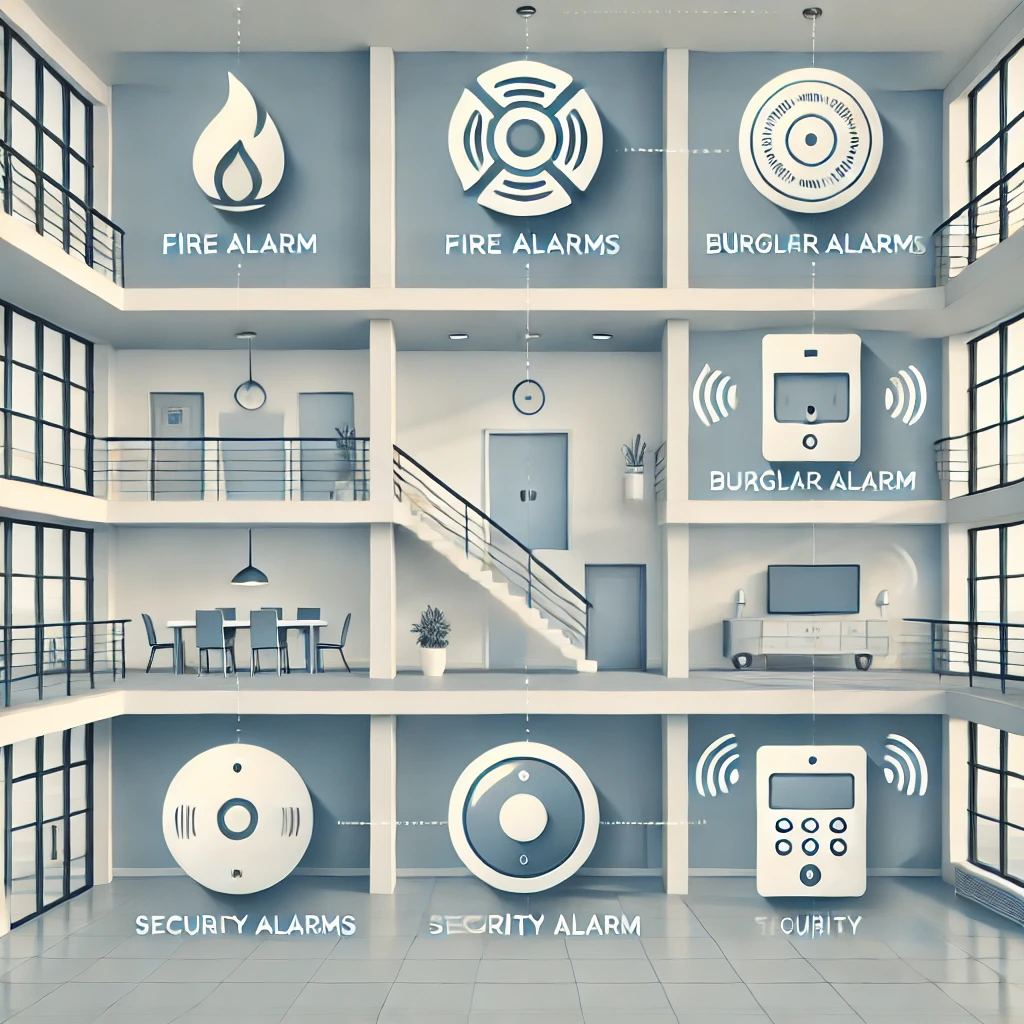
Fire Alarm Systems: Ensuring Safety in Every Building
Table of Contents
Fire alarm systems play a critical role in safeguarding residential, commercial, and industrial spaces from fire hazards. These systems are always on alert, detecting any sign of smoke or fire, and providing early warnings to prevent disaster. Whether you’re managing a commercial building, overseeing a factory, or maintaining a residential complex, knowing about the different fire protection systems is crucial to protecting lives and property.
Types of Fire Safety Systems for Every Setting
The right fire safety system depends on your building’s size, occupancy, and specific risks. Understanding the types of alarms available will help you choose the best one.
1. Conventional Fire Alarms
Conventional systems divide buildings into zones, each monitored by a control panel. When triggered, the control panel indicates the zone where the fire is detected. This option is cost-effective for small buildings, such as retail stores and smaller office spaces.
2. Addressable Fire Detection
Addressable systems assign individual addresses to each device (like smoke detectors or heat sensors). This allows for quick identification of the exact location of the fire. These systems are especially useful for larger facilities, where swift responses are necessary.
3. Wireless Fire Systems
Wireless fire alarms eliminate the need for wiring between devices and the control panel. Ideal for buildings where wiring is difficult or invasive, these systems offer flexibility and ease of installation.
4. Hybrid Fire Safety
Hybrid systems combine wired and wireless technologies. This flexibility allows for customized solutions, particularly useful in complex environments like historical buildings or facilities with specific wiring limitations.
5. Automatic Fire Protection
Automatic systems detect fires and activate alarms without human intervention. Perfect for industrial settings where quick action is essential, these systems are designed for safety even when no one is around.
Components of Effective Fire Protection Systems
Fire alarm systems consist of various components that work together to ensure full coverage of fire detection and alerts.
1. Control Panel
The control panel serves as the brain of the system, monitoring all sensors and alarm devices.
2. Smoke, Heat, and Gas Detectors
Each detector serves a unique purpose. Smoke detectors are essential in most buildings, while heat and gas detectors may be required in specific industrial environments.
3. Manual Call Points
In case automatic detection fails, manual call points allow occupants to trigger an alarm manually.
4. Alarm Devices
Alarm devices, such as bells or sirens, ensure that occupants are immediately aware of fire hazards and can evacuate the building safely.
Choosing the correct fire alarm depends on several factors, including:
Building Size and Layout: Larger buildings may benefit more from addressable or hybrid systems.
Occupancy: Different buildings—such as schools, offices, or industrial sites—have unique fire risks that need tailored systems.
Specific Hazards: If your building stores flammable materials or houses sensitive electronics, consider systems like automatic suppression or addressable alarms.
Proper Installation and Maintenance for Optimal Performance
After selecting the appropriate system, installation and regular maintenance are crucial for optimal performance. Improperly installed fire alarms can fail when they’re needed most.
Maintenance tips include:
Regular visual checks.
Annual professional inspections.
Updating software and replacing batteries periodically.
Case Studies of Fire Alarm Success Stories
Here are some examples of fire alarm systems in action:
Highrise Office Building: A 50-story office complex successfully deployed an addressable fire system, preventing panic during a small kitchen fire.
Historic Theater: A wireless fire alarm was chosen to preserve the architecture while ensuring safety.
Industrial Facility: A hybrid system provided comprehensive protection in a sprawling industrial complex.
Future Trends in Fire Detection Technology
Looking ahead, innovations in fire alarm technology will shape the future of building safety. Here’s what’s on the horizon:
AI-Powered Fire Detection: Artificial intelligence will improve early fire detection and reduce false alarms.
IoT-Integrated Systems: Fire alarms connected to the Internet of Things (IoT) will enable a coordinated response between fire alarms, sprinklers, and emergency services.
Real-Time Monitoring Apps: Mobile apps will allow users to monitor fire alarms remotely, ensuring faster responses.
Conclusion: Prioritize Fire Safety in Your Building
A well-maintained fire alarm system is crucial to any building’s safety strategy. From conventional alarms to the most advanced addressable systems, understanding the options available will help you protect your property and ensure the safety of occupants.
Industrial piping engineering isn’t just connecting pipes—it’s the circulatory system of your billion-rupee project, where 1mm misalignment can trigger ₹18Cr in rework. The ASME B31.3-2024 Code now mandates 4D BIM coordination for all mega-projects, while OISD-RP-109 requires stress analysis for pipelines >150°C—standards we enforce through our CAESAR II Certified Engineering Team. When a Rajasthan solar thermal plant’s improperly supported steam lines failed (₹142Cr delay, per NPCIL Case Study), it validated our 5-Phase Engineering Protocol:
Smart Routing (AI-powered clash detection with structural/electrical)
Thermal Growth Simulation (FEA for -40°C to 550°C swings)
Vibration Analysis (CFD modeling for pump/compressor tie-ins)
Fire extinguishers are the first line of defense against small fires, capable of preventing catastrophic damage when used properly. According to the National Fire Protection Association (NFPA), portable fire extinguishers can effectively control or extinguish about 95% of fires that occur when they are:
The right type for the fire
Properly maintained
Easily accessible
Used by trained personnel
At SRJ Piping India, we've seen firsthand how properly installed and maintained fire protection systems can save lives and property. Our fire protection services have helped numerous industrial and commercial facilities achieve optimal safety standards.
Key Statistics
Fires cause billions in property damage annually worldwide
Over 60% of businesses never recover after a major fire incident
Proper fire extinguisher use can reduce fire damage by up to 80%
Most fire-related deaths are caused by smoke inhalation rather than burns
Types of Fire Extinguishers
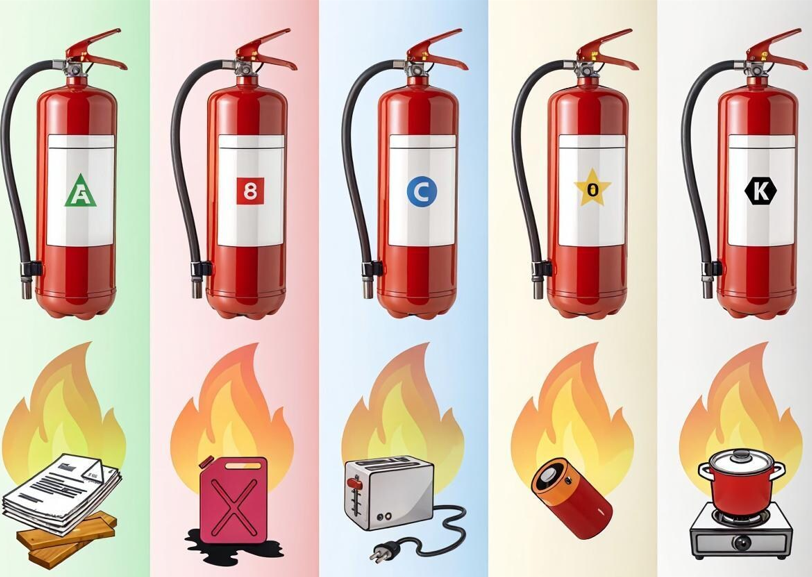
Fire extinguishers are classified based on the type of fires they're designed to combat. Understanding these classifications is crucial for effective fire safety.
Class A: Ordinary Combustibles
Designed for fires involving ordinary combustibles like wood, paper, cloth, rubber, and many plastics. These extinguishers typically use water or dry chemical agents.
Common locations: Offices, schools, homes, libraries
Class B: Flammable Liquids
Effective against fires involving flammable liquids such as gasoline, oil, grease, tar, oil-based paints, and flammable gases. These extinguishers use foam, dry chemical, or carbon dioxide.
Common locations: Kitchens, garages, laboratories, industrial sites
Class C: Electrical Equipment
Designed for fires involving energized electrical equipment like appliances, wiring, circuit breakers, and outlets. These extinguishers use non-conductive agents like carbon dioxide or dry chemical.
Common locations: Server rooms, electrical closets, manufacturing plants
Class D: Combustible Metals
For fires involving combustible metals such as magnesium, titanium, potassium, and sodium. These specialized extinguishers use dry powder agents.
Common locations: Laboratories, metal fabrication facilities
Class K: Cooking Media
Designed for commercial kitchen fires involving cooking oils, trans-fats, or fats in cooking appliances. These use wet chemical agents that cool the fire and prevent re-ignition.
Common locations: Commercial kitchens, restaurants, cafeterias
Many modern extinguishers are multipurpose, labeled for use with multiple fire classes (e.g., ABC extinguishers). Our annual maintenance services ensure your extinguishers remain ready for any type of fire emergency.
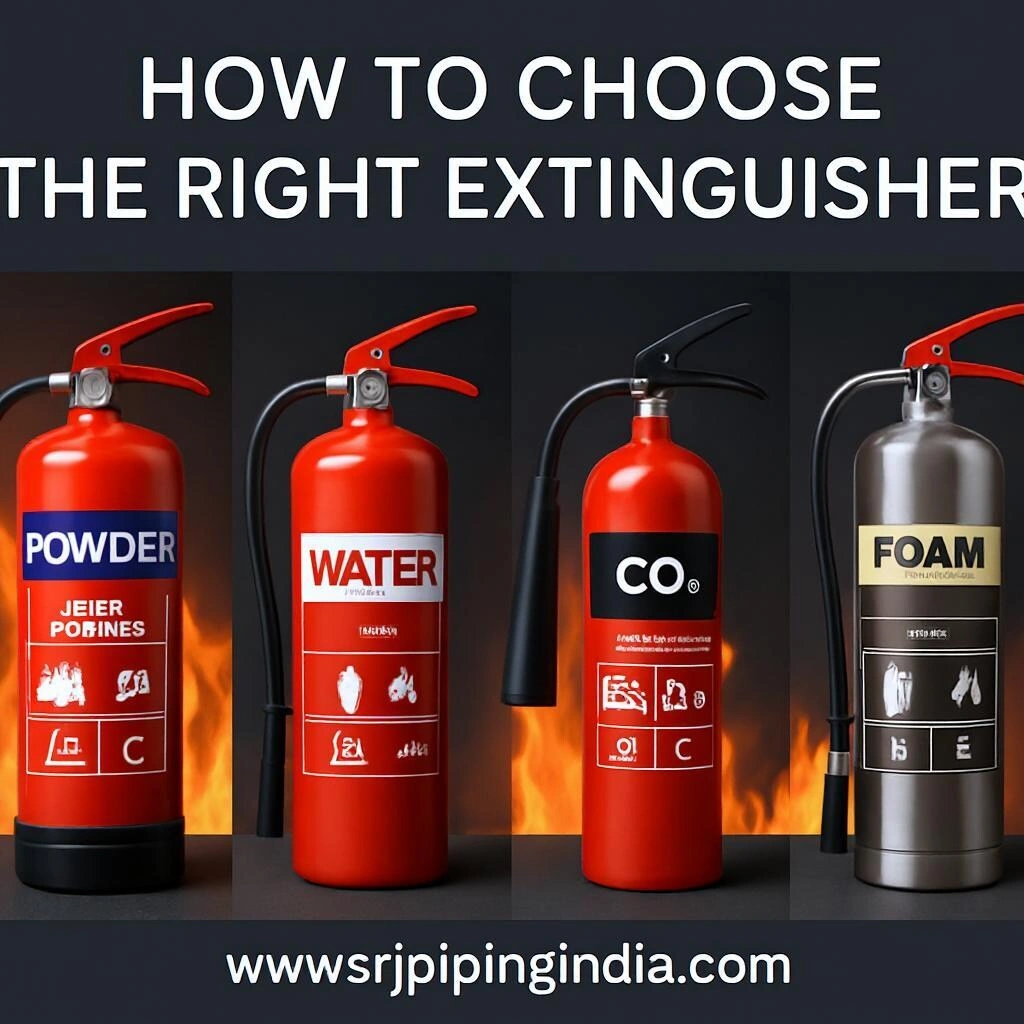
Fire Extinguisher Color Coding
Fire extinguishers often use color-coded labels or bodies to quickly identify their contents and suitable fire types:
Water (Red)
Wet Chemical (Yellow)
Dry Powder (Blue)
Foam (White)
CO₂ (Black)
Note that color coding systems may vary by region. Always read the label for specific instructions and classifications.
How to Choose the Right Extinguisher
Selecting the appropriate fire extinguisher depends on several factors:
Factors to consider when selecting fire extinguishers
Fire risk assessment: Identify potential fire hazards in your facility
Size and layout: Ensure adequate coverage for all areas
User capability: Consider who will be operating the extinguishers
Environmental factors: Temperature extremes or special hazards
Compliance requirements: Meet local regulations and insurance standards
Our experts at SRJ Piping India can conduct a comprehensive fire protection system assessment to recommend the ideal extinguisher types and placements for your specific needs.
The PASS Method of Operation
Using a fire extinguisher correctly requires following the PASS technique:
P
Pull the pin
Break the tamper seal and pull the pin to unlock the operating lever
A
Aim low
Point the nozzle or hose at the base of the fire
S
Squeeze the lever
This releases the extinguishing agent
S
Sweep side to side
Move carefully across the fire until it's out
Important Safety Tips
Always have an escape route at your back
Never turn your back on a fire, even if it appears to be out
If the fire grows or doesn't extinguish quickly, evacuate immediately
Only attempt to fight small, contained fires
Proper Placement and Accessibility
Effective fire extinguisher placement is critical for quick response:
Visibility: Mount in conspicuous locations with clear markings
Accessibility: No more than 5 feet above the floor
Proximity: Within 75 feet of any point in commercial buildings
Hazard areas: Near specific hazards like kitchens or electrical panels
Pathways: Along normal paths of travel and exits
Our industrial piping experts can help design optimal fire protection system layouts for complex facilities.
Fire Extinguisher Maintenance
Regular maintenance ensures extinguishers will function when needed:
Maintenance Activity
Frequency
Description
Visual Inspection
Monthly
Check for proper pressure, visible damage, and accessibility
Professional Inspection
Annually
Certified technician checks internal and external condition
Hydrostatic Testing
Every 5-12 years
Pressure test to verify cylinder integrity (varies by type)
Recharging
After use or when needed
Refill extinguishing agent and repressurize
SRJ Piping India offers comprehensive annual maintenance contracts to keep your fire protection systems in peak condition.
Proper maintenance extends extinguisher lifespan and reliability
Compliance Standards and Regulations
Fire extinguishers must meet various national and international standards:
NFPA 10: Standard for Portable Fire Extinguishers
OSHA 29 CFR 1910.157: Portable Fire Extinguishers requirements
IS 2190: Indian Standard for selection and installation
EN 3: European standard for portable extinguishers
UL 711: Rating and fire testing of extinguishers
Our fire protection systems are designed and installed to meet all relevant standards, ensuring compliance and optimal safety.
Frequently Asked Questions
How often should fire extinguishers be replaced?
Fire extinguishers don't have a specific expiration date but typically last 10-12 years with proper maintenance. They should be replaced when they can no longer be properly serviced or fail hydrostatic testing.
Can I use any fire extinguisher on an electrical fire?
Only Class C or multipurpose (ABC) extinguishers should be used on electrical fires. Water-based extinguishers can conduct electricity and create shock hazards.
How far will a typical fire extinguisher spray?
Most portable extinguishers have a range of 6-20 feet, depending on size and type. Always check the manufacturer's specifications for your specific model.
What's the difference between dry chemical and CO₂ extinguishers?
Dry chemical extinguishers leave a residue but are effective on multiple fire types. CO₂ extinguishers leave no residue but are only effective on Class B and C fires and can be dangerous in confined spaces.
How many fire extinguishers does my business need?
The number depends on your facility's size, layout, and fire hazards. NFPA 10 recommends extinguishers be no more than 75 feet apart in commercial buildings. Our fire protection experts can conduct a thorough assessment.
Professional Fire Protection Services
SRJ Piping India offers comprehensive fire protection solutions:
Industrial piping systems form the circulatory system of manufacturing plants, refineries, and processing facilities. The quality of piping installation and maintenance directly impacts:
Operational efficiency and productivity
Worker and environmental safety
Regulatory compliance
Long-term maintenance costs
System longevity and reliability
At SRJ Piping India, we've completed over 150 industrial piping projects across diverse sectors, giving us unique insight into what makes a contractor truly exceptional.
1. Proven Industry Experience
Look for contractors with:
Minimum 5-10 years in your specific industry (chemical, pharmaceutical, oil & gas, etc.)
Portfolio of completed projects similar to yours in scale and complexity
Experience with the specific materials and systems you require (stainless steel, HDPE, FRP, etc.)
Established relationships with material suppliers and equipment manufacturers
SRJ Advantage: With 12+ years specializing in industrial piping systems, we've successfully executed projects for leading companies across India.
2. Relevant Certifications and Compliance
Essential certifications to verify:
ISO 9001:2015 for quality management systems
ISO 45001 for occupational health and safety
ASME B31.3 for process piping compliance
NBIC for boiler and pressure vessel code compliance
Q: How do you ensure quality control during piping installation?
A: We implement a 7-stage quality control process that includes material verification, weld testing, pressure testing, and final inspection. Our quality assurance protocol has been refined over hundreds of projects.
Chemical piping systems form the circulatory network of process industries, safely transporting aggressive fluids under varying temperatures and pressures. These specialized systems are engineered to handle corrosive, toxic, or otherwise hazardous materials while maintaining structural integrity and preventing environmental contamination.
At SRJ Piping India, we've designed chemical piping systems for diverse applications including:
Pharmaceutical manufacturing
Petrochemical processing
Water treatment plants
Food and beverage production
Semiconductor fabrication
Key Considerations for Chemical Piping
Chemical compatibility with piping materials
Temperature and pressure requirements
Flow characteristics and velocity limitations
Expansion and contraction management
Accessibility for maintenance and inspection
1. Material Selection for Chemical Piping
Choosing the right material is the foundation of any chemical piping system. The selection depends on the chemical properties of the fluid, operating conditions, and budget constraints.
Metallic Materials
Stainless Steel (304/316): Excellent for most acids except hydrochloric
Duplex Steel: Higher strength and corrosion resistance
Hastelloy: For highly corrosive environments
Titanium: Exceptional for chlorides and oxidizing acids
Non-Metallic Materials
PVC/CPVC: Cost-effective for many acids at moderate temperatures
PP/PE: Excellent chemical resistance, lightweight
PVDF: High purity applications like semiconductors
Fiberglass Reinforced Plastic (FRP): For highly corrosive environments
Our material selection service includes comprehensive chemical resistance testing to ensure optimal performance.
2. System Design Considerations
Proper design is crucial for safety, efficiency, and longevity of chemical piping systems. Key design factors include:
Hydraulic Design
Calculating proper pipe diameters to maintain optimal flow velocities (typically 1-3 m/s for chemicals) while minimizing pressure drop and erosion risks.
Thermal Considerations
Accounting for thermal expansion in high-temperature systems through expansion loops, bellows, or flexible piping sections.
Support and Anchoring
Proper spacing of supports to prevent sagging and vibration while allowing for thermal movement.
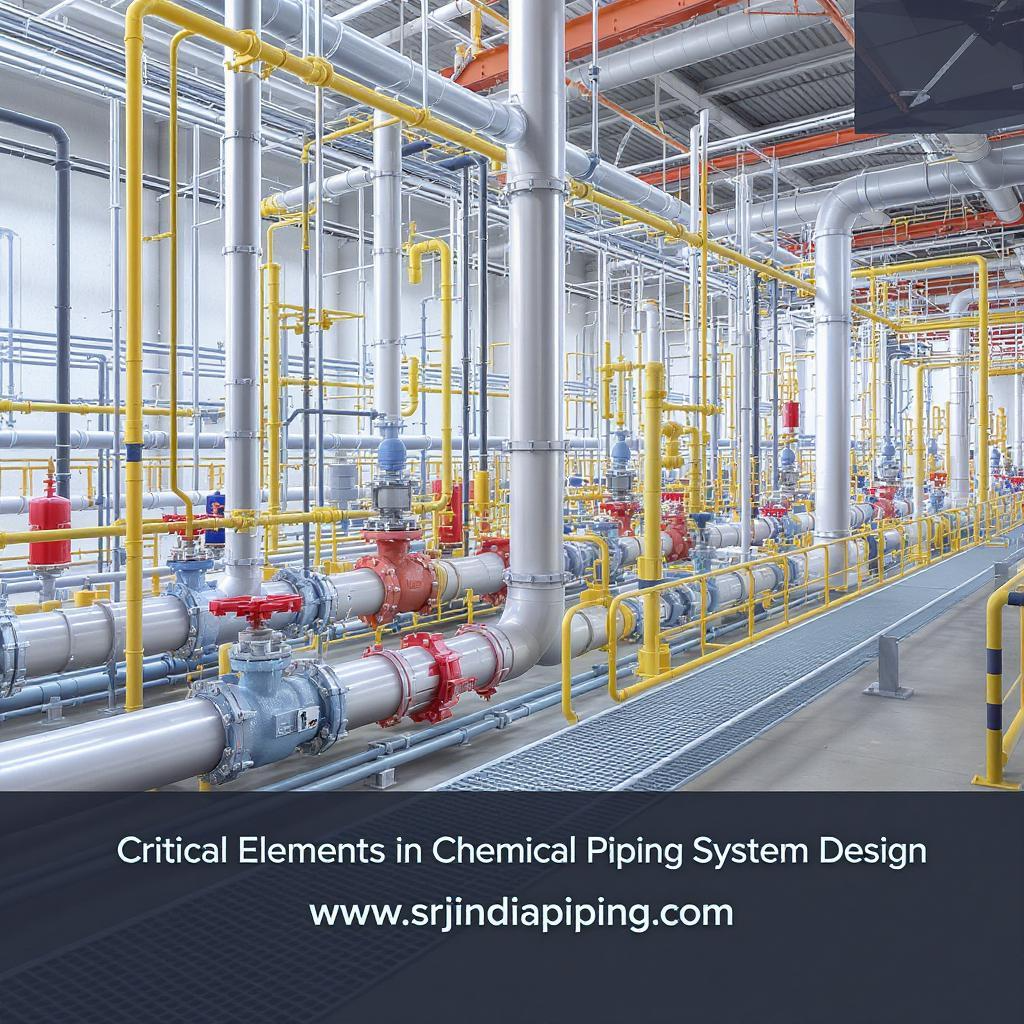
Critical elements in chemical piping system design
3. Installation Best Practices
Proper installation ensures system integrity and prevents premature failures. Our installation protocols include:
Pre-installation Inspection: Verify material certificates and check for transport damage
Proper Handling: Use nylon slings for non-metallic pipes to prevent surface damage
Alignment: Avoid forced alignment that creates residual stresses
Protection: Implement measures against UV degradation for outdoor plastic pipes
Testing: Conduct hydrostatic tests and leak checks before commissioning
Q: How often should chemical piping systems be inspected?
A: The frequency depends on the chemical service, but most systems should have thorough inspections annually, with critical systems requiring quarterly checks. Our inspection team can help establish an appropriate schedule.
Q: What's the typical lifespan of a chemical piping system?
A: With proper material selection and maintenance, metallic systems can last 15-25 years, while high-quality plastic systems may last 10-15 years. Aggressive chemical services may require more frequent replacement.
Q: How do you handle chemical piping for high-purity applications?
A: High-purity systems require special materials like PVDF or electropolished stainless steel, orbital welding techniques, and rigorous cleaning protocols. We've completed numerous pharmaceutical-grade piping installations.